Frontend vs Backend Development (Explained for Business Owners)

If you're planning a new website or web application, you've probably heard developers mention:
"Frontend"
"Backend"
"Full-stack"
But what do these actually mean for your business?
Understanding the difference helps you:
Budget correctly
Hire the right developers
Avoid project delays
Make better technical decisions
Let’s break it down in simple business terms.
What Is Frontend Development?
Frontend development is everything your customers see and interact with.
It includes:
Website design layout
Buttons, forms, and navigation
Colors, typography, branding
Animations and responsiveness
Mobile compatibility
In short:
Frontend = User Experience (What your visitors see)
Common Frontend Technologies
HTML
CSS
JavaScript
React / Vue
Tailwind CSS
For example:
If a visitor fills out a contact form, the form design and interaction are handled on the frontend.
What Is Backend Development?
Backend development is everything happening behind the scenes.
It includes:
Server logic
Databases
User authentication
Payment processing
Admin dashboards
API integrations
In short:
Backend = Business Logic & Data Management
Common Backend Technologies
PHP (Laravel)
Node.js
Python
MySQL / PostgreSQL
Cloud hosting environments
When someone submits a form:
Frontend collects the data
Backend processes it and stores it
Simple Real-World Analogy
Think of a restaurant:
Dining area, menu, presentation → Frontend
Kitchen, chefs, storage → Backend
Customers never see the kitchen, but it's critical.
Same with your website.
Why Business Owners Must Understand the Difference
Many businesses make the mistake of focusing only on design.
But here's the reality:
A beautiful website without a backend structure:
Can't scale
Loads slowly
Has security risks
Can't handle automation
Doesn't integrate with tools
On the other hand:
A powerful backend with a poor frontend:
Confuses users
Reduces conversions
Increases bounce rate
You need both working together.
When You Mostly Need Frontend
You may prioritize frontend when:
You're redesigning your website
Improving brand experience
Optimizing mobile responsiveness
Increasing conversion rates
This is common in:
Marketing websites
Landing pages
Portfolio sites
When Backend Becomes Critical
Backend is essential when:
You need user logins
You sell products online
You collect user data
You integrate CRM or payment systems
You build SaaS platforms
This applies to:
Membership sites
Booking systems
eCommerce platforms
What Is Full-Stack Development?
Full-stack developers handle both frontend and backend.
This is ideal for:
Startups
MVP builds
Small-to-medium businesses
However, for larger projects:
You often need specialists in both areas.
Cost Difference: Frontend vs Backend
Typically:
Frontend projects:
Lower complexity
Faster timelines
Lower cost
Backend projects:
Higher complexity
Security & scalability requirements
Higher cost
But the real cost depends on:
Features
Integrations
Scalability
Hosting environment
Which One Is More Important?
Neither.
They serve different purposes:
Frontend attracts users.
Backend sustains your business.
For growth-focused businesses, backend architecture often determines long-term success.
Business Advice Before Hiring Developers
Before starting:
Define your business goals
Identify required features
Plan for scalability
Consider security needs
Choose the right tech stack
If you're building something that will grow, backend planning is critical from day one. Applying SOLID principles can keep that architecture easier to maintain as features expand.
Final Thoughts
Understanding frontend vs backend development empowers you to:
Invest wisely
Avoid technical debt
Build scalable digital assets
Increase ROI
Your website is not just a design.
It's infrastructure.
If you're planning a new build or redesign, align technical decisions with business goals from the start.
Frequently Asked Questions (FAQ)
1. Can I launch with the frontend only?
Yes, for simple informational websites.
But for interactive platforms, a backend is required.
2. Is frontend easier than backend?
Frontend focuses more on design and interaction.
Backend focuses on logic and infrastructure.
Both require expertise.
3. Which is better for SEO?
Frontend affects:
Page speed
Mobile responsiveness
UX signals
Backend affects:
Performance optimization
Server speed
Technical SEO
Both impact SEO success.
4. Should I hire one developer or a team?
For small websites: Full-stack developer is enough.
For scalable applications: Hire frontend + backend specialists.
5. How long does development take?
Basic website: 2-4 weeks
Web application: 6-16+ weeks
Complex platforms: Several months
It depends on features and integrations.
Tagged in

Written by
Madhavendra DuttI build modern, high-performance websites and provide secure hosting and strategic digital marketing solutions that help businesses grow online. My focus is on clean development, speed, reliability, and measurable results.
View all posts →Related Posts
Continue exploring similar topics
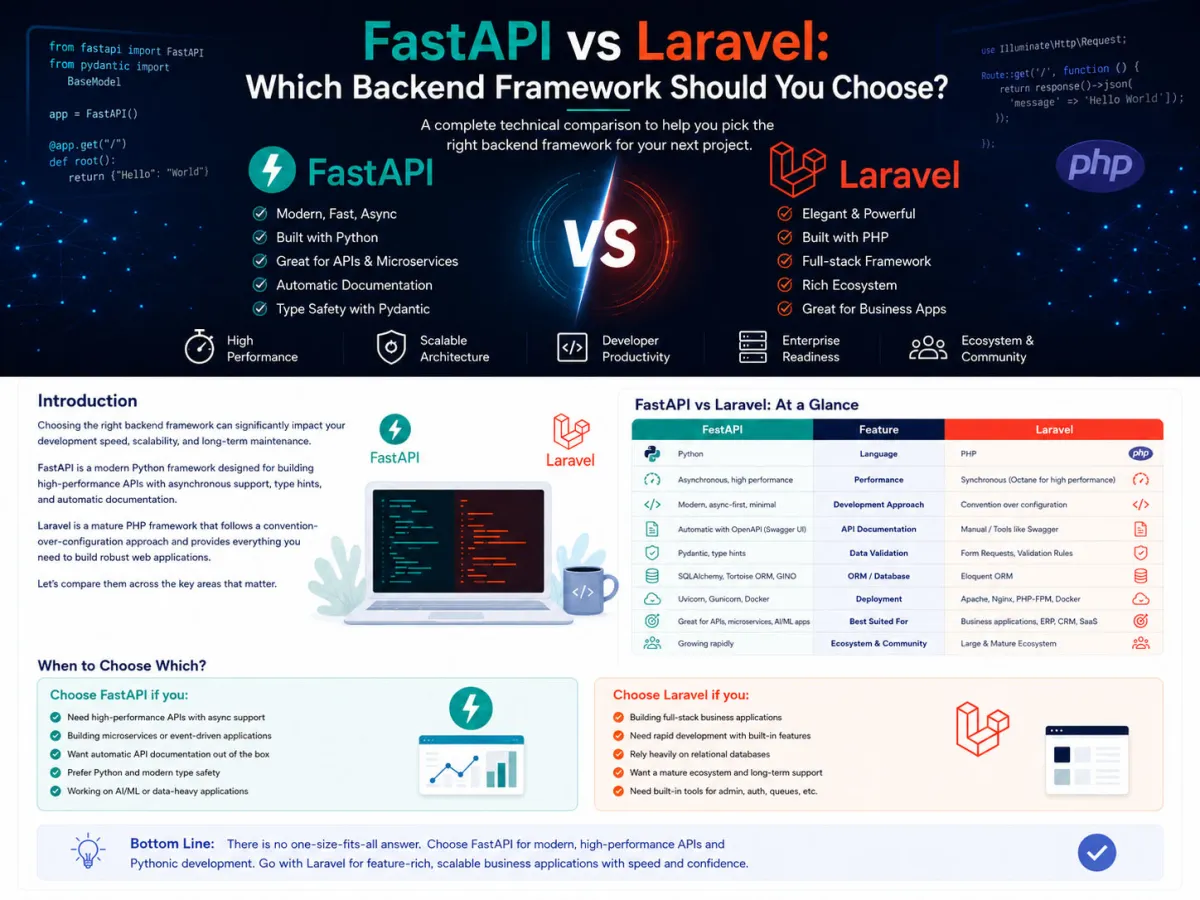
Compare FastAPI and Laravel across performance, async APIs, scalability, AI integration, d...
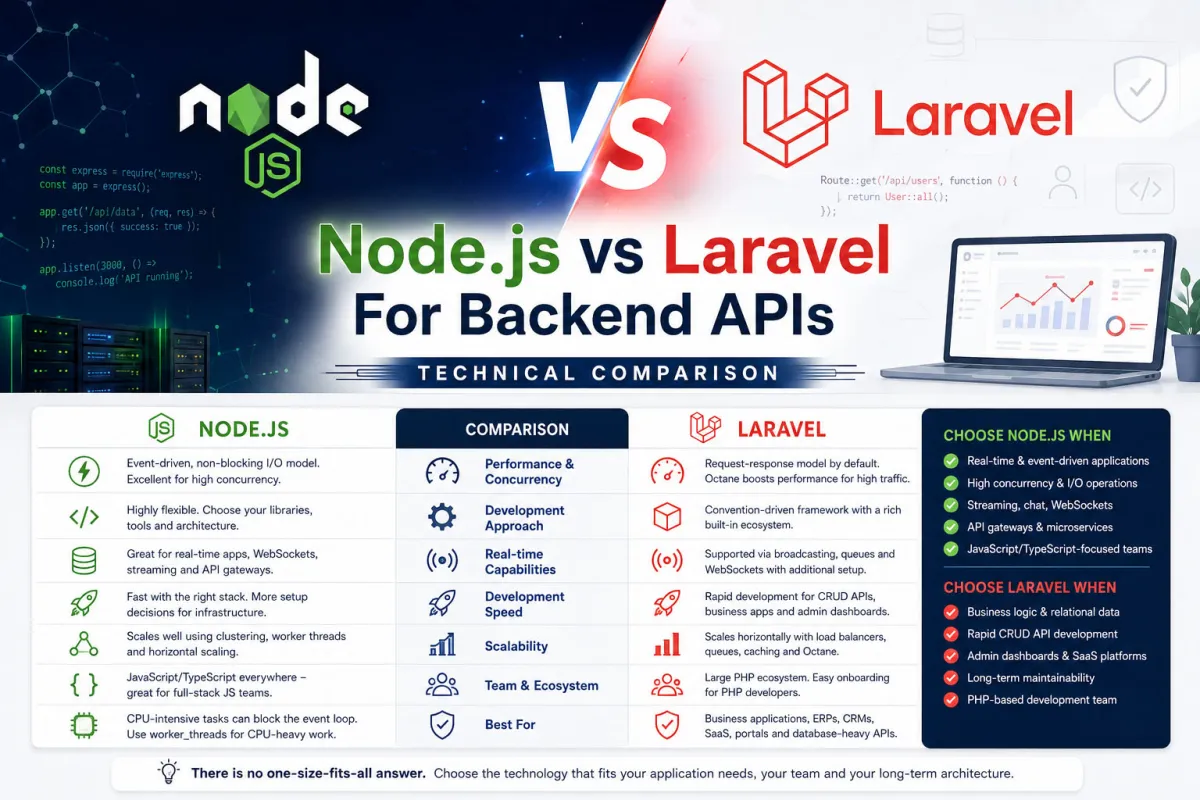
Node.js or Laravel for backend APIs? Compare performance, concurrency, scalability, develo...
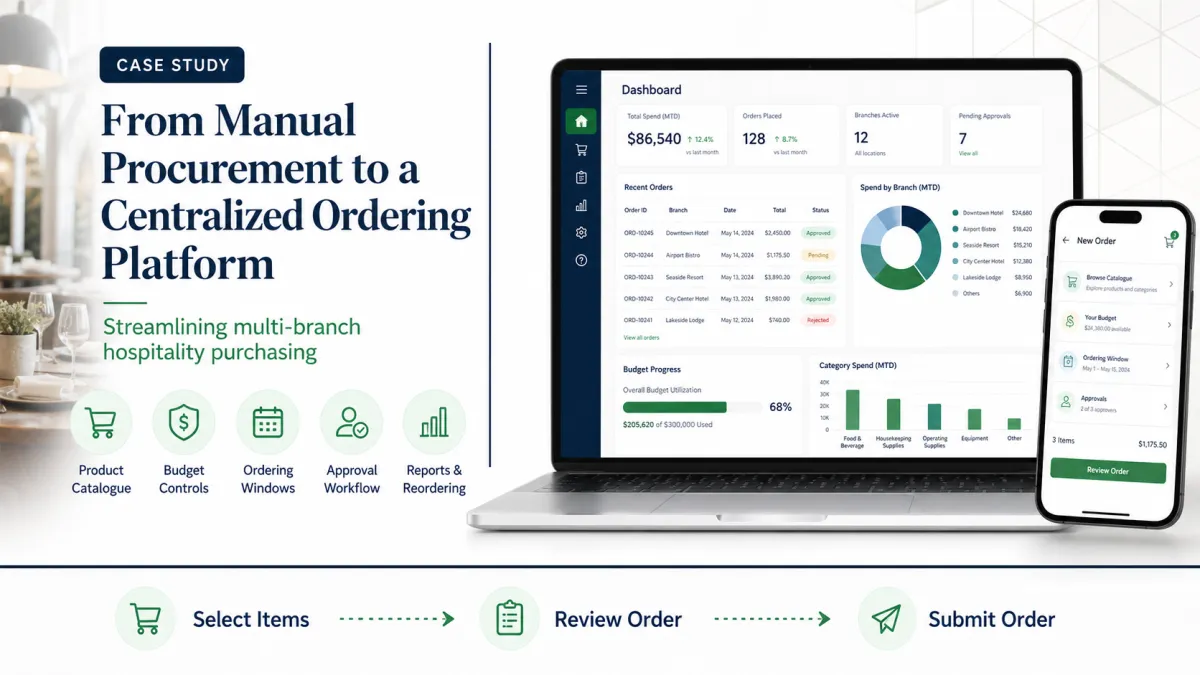
See how we replaced spreadsheets, messages, and manual approvals with a centralized orderi...