SOLID Principles Explained: Writing Clean, Scalable, and Maintainable Code
In modern software development, writing code that works is not enough. The real challenge is writing code that is easy to understand, maintain, extend, and test over time. This is where the SOLID principles come in.
The SOLID principles are five object-oriented design guidelines that help developers create robust and flexible software architectures. Introduced by Robert C. Martin (Uncle Bob), these principles are widely used in professional software development and are a cornerstone of clean code practices.
In this article, we’ll break down the SOLID principles, explain each one with simple examples, and show why they matter for building scalable applications.
What Are SOLID Principles?
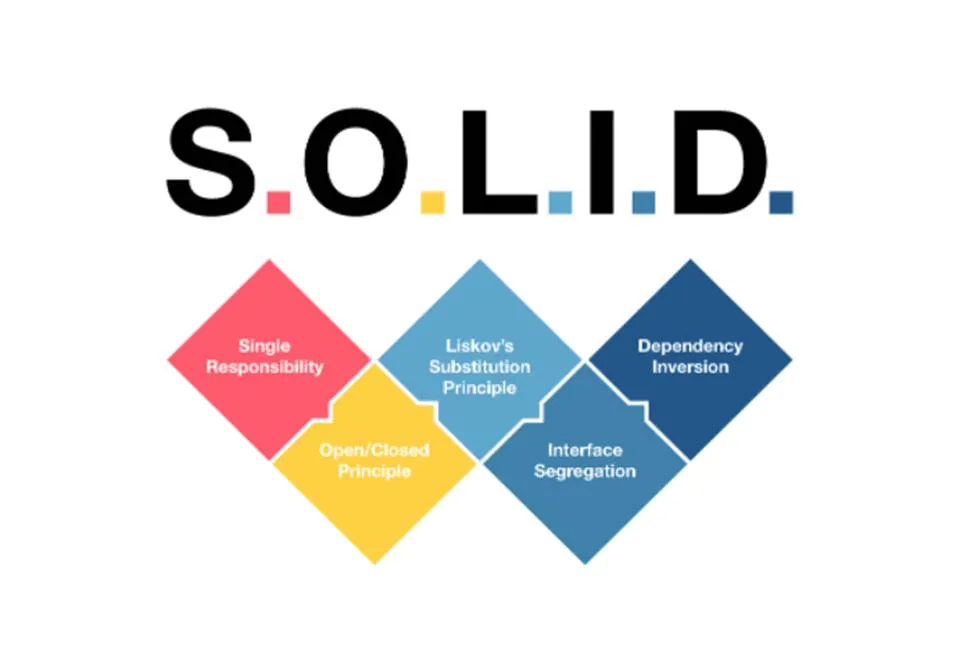
SOLID is an acronym representing five design principles:
S – Single Responsibility Principle
O – Open/Closed Principle
L – Liskov Substitution Principle
I – Interface Segregation Principle
D – Dependency Inversion Principle
Together, these principles help developers reduce code coupling, improve readability, and minimize the risk of bugs when requirements change.
1. Single Responsibility Principle (SRP)
Definition:
A class should have only one reason to change.
In simple terms, a class should focus on one job and do it well. When a class handles multiple responsibilities, changes in one area can break another.
Why SRP Matters
Improves code readability
Makes testing easier
Reduces unexpected side effects
Example
Instead of having one class that handles user data and database logic, split them:
User → Handles user data
UserRepository → Handles database operations
This separation ensures that changes to the database don't affect business logic.
2. Open/Closed Principle (OCP)
Definition:
Software entities should be open for extension but closed for modification.
This means you should be able to add new functionality without changing existing code.
Why OCP Matters
Prevents breaking existing features
Encourages reusable and extensible code
Supports scalable application growth
Example
Instead of modifying a payment processor every time a new payment method is added, you can:
Create a PaymentMethod interface
Implement different payment types (CreditCard, PayPal, Crypto)
New payment methods can be added without touching existing logic.
3. Liskov Substitution Principle (LSP)
Definition:
Objects of a superclass should be replaceable with objects of its subclasses without breaking the application.
In other words, subclasses should behave like their parent classes.
Why LSP Matters
Prevents unexpected runtime errors
Ensures predictable behavior
Strengthens inheritance hierarchies
Example
If a Bird class has a fly() method, a Penguin subclass that cannot fly violates LSP. A better approach is to separate flying behavior into its own interface.
4. Interface Segregation Principle (ISP)
Definition:
Clients should not be forced to depend on interfaces they do not use.
Large, bloated interfaces make systems harder to maintain. Instead, create small, specific interfaces.
Why ISP Matters
Reduces unnecessary dependencies
Improves flexibility
Makes code easier to refactor
Example
Instead of one large Machine interface with methods for printing, scanning, and faxing, split it into:
Printer
Scanner
FaxMachine
Classes only implement what they actually need.
5. Dependency Inversion Principle (DIP)
Definition:
High-level modules should not depend on low-level modules. Both should depend on abstractions.
This principle promotes loose coupling by relying on interfaces rather than concrete implementations.
Why DIP Matters
Makes code more testable
Simplifies swapping implementations
Encourages modular design
Example
Instead of a service directly depending on a specific database class, it depends on a Database interface. This allows you to switch databases or use mocks during testing.
Benefits of Using SOLID Principles
Applying SOLID principles consistently leads to:
Cleaner code
Easier debugging
Improved testability
Better scalability
Reduced technical debt
While they may feel abstract at first, SOLID principles save significant time and effort in long-term projects.
Common Misconceptions About SOLID Principles
"SOLID is only for large projects"
Even small applications benefit from clean architecture."SOLID makes code complex"
Poor implementation causes complexity, not the principles themselves."You must follow all principles strictly"
SOLID principles are guidelines, not rigid rules.
When Should You Use SOLID Principles?
SOLID principles are especially valuable when:
Building long-term or enterprise applications
Working in teams
Maintaining or refactoring legacy code
Designing frameworks or libraries
For quick prototypes, you may not need full SOLID compliance, but understanding the principles helps you make smarter design decisions.
SOLID Principles and Clean Architecture
SOLID principles form the foundation of Clean Architecture, Hexagonal Architecture, and Domain-Driven Design (DDD). Mastering SOLID makes it easier to understand and implement these advanced architectural patterns.
Final Thoughts
The SOLID principles are essential for any developer who wants to write maintainable, scalable, and professional-grade software. They encourage thoughtful design, reduce code smells, and make applications easier to extend as requirements evolve.
You don't need to apply every principle perfectly from day one. Start small, identify problem areas in your code, and refactor gradually using SOLID as your guide.
Clean code isn't written once. It's designed, refined, and improved over time.
Frequently Asked Questions (FAQs)
1. What are SOLID principles in software engineering?
SOLID principles are five object-oriented design guidelines that help developers write clean, maintainable, and scalable code. The acronym stands for Single Responsibility, Open/Closed, Liskov Substitution, Interface Segregation, and Dependency Inversion. These principles reduce tight coupling and improve long-term code quality.
2. Why are SOLID principles important?
SOLID principles are important because they make software easier to understand, test, and extend. By following these principles, developers can reduce bugs, avoid code duplication, and adapt more easily to changing requirements without breaking existing functionality.
3. Are SOLID principles only for object-oriented programming?
SOLID principles are primarily designed for object-oriented programming (OOP), but many of their ideas, such as separation of concerns and loose coupling, can be applied to other programming paradigms like functional or modular programming.
4. Do I need to use all SOLID principles in every project?
No, SOLID principles are guidelines, not strict rules. You should apply them where they add value. For small or short-lived projects, using all five principles may be unnecessary, but understanding them helps you make better architectural decisions.
5. What is the most important SOLID principle?
There is no single "most important" SOLID principle. However, many developers consider the Single Responsibility Principle the foundation, because breaking responsibilities into focused units naturally supports the other principles.
6. How do SOLID principles improve code maintainability?
SOLID principles improve maintainability by making code modular and predictable. When each class has a clear purpose and depends on abstractions rather than concrete implementations, changes can be made with minimal impact on the rest of the system.
7. Are SOLID principles still relevant today?
Yes, SOLID principles are still highly relevant in modern software development. They are used in contemporary architectures such as Clean Architecture, Microservices, and Domain-Driven Design, and are applicable across modern frameworks and languages.
8. Can beginners learn and apply SOLID principles?
Absolutely. While some principles may seem abstract at first, beginners can start by applying the Single Responsibility Principle and gradually learn the others. Understanding SOLID early helps developers avoid bad design habits later.
9. What are common mistakes when applying SOLID principles?
Common mistakes include over-engineering small projects, creating too many unnecessary abstractions, and blindly applying principles without understanding the problem domain. SOLID should simplify code, not make it harder to follow.
10. How are SOLID principles related to design patterns?
Many design patterns, such as Strategy, Factory, and Observer, naturally follow SOLID principles. Understanding SOLID makes it easier to recognize when and why to use certain design patterns effectively.

Written by
Madhavendra DuttI build modern, high-performance websites and provide secure hosting and strategic digital marketing solutions that help businesses grow online. My focus is on clean development, speed, reliability, and measurable results.
View all posts →Related Posts
Continue exploring similar topics
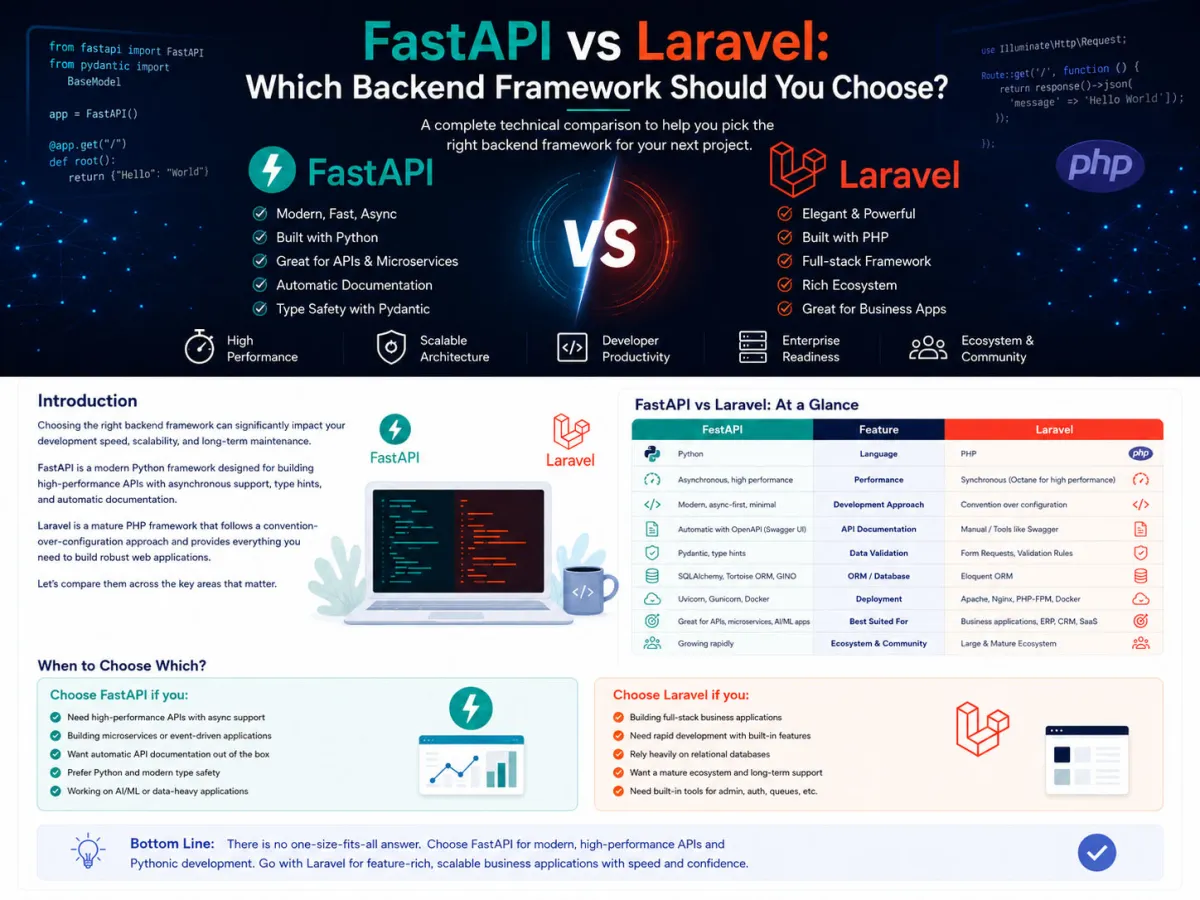
Compare FastAPI and Laravel across performance, async APIs, scalability, AI integration, d...
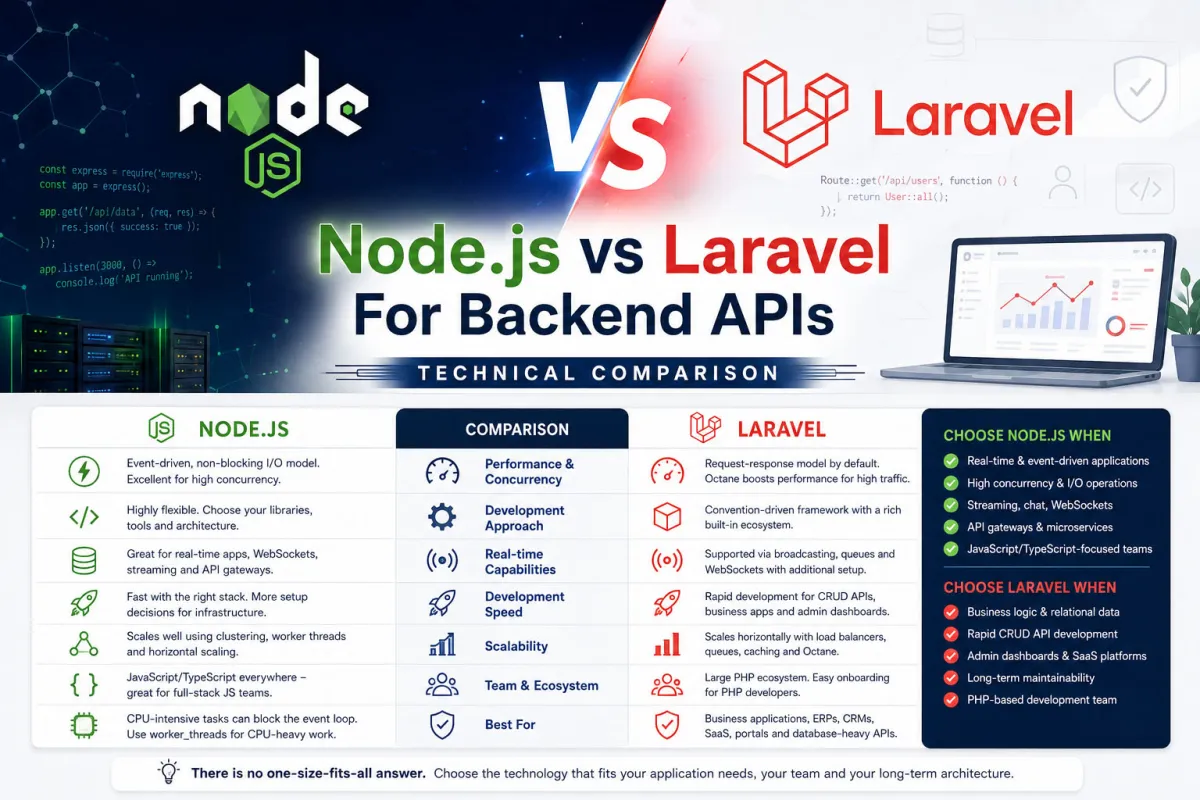
Node.js or Laravel for backend APIs? Compare performance, concurrency, scalability, develo...

See how we replaced spreadsheets, messages, and manual approvals with a centralized orderi...