Dark Web vs Deep Web: What’s the Real Difference?
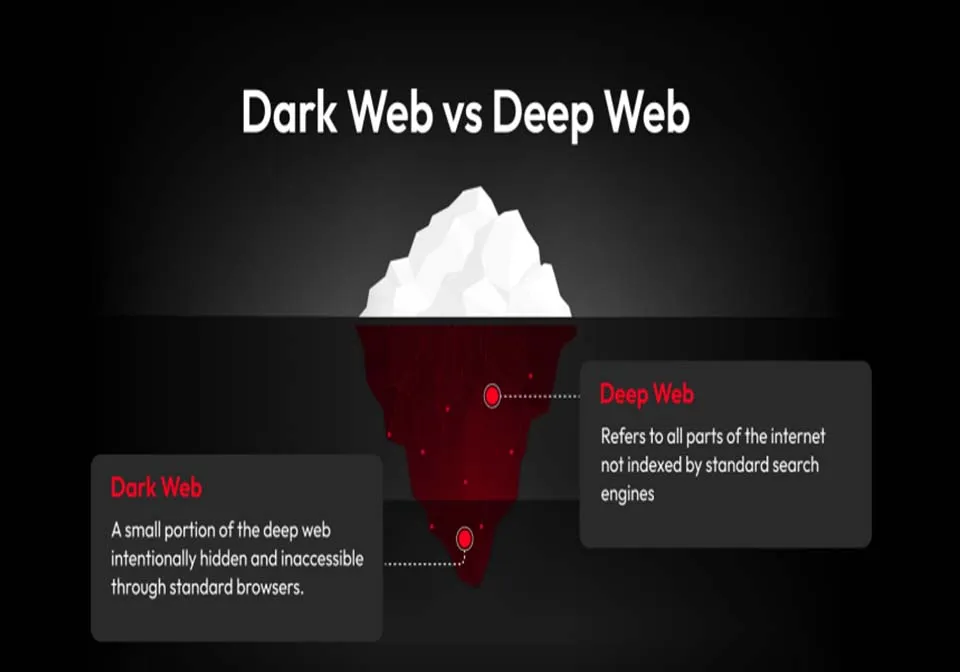
Many people think the dark web and the deep web are the same thing.
They are not.
Understanding the difference is important for cybersecurity, privacy awareness, and online safety.
Let’s break it down clearly and simply.
What is the Deep Web?
The Deep Web includes any part of the internet that is not indexed by search engines like Google.
This includes:
Email inboxes
Online banking portals
Private company databases
Academic research databases
Membership-only websites
Cloud storage accounts
If you need a login to access it, it's likely part of the deep web.
Key Point:
The Deep Web is not illegal.
It simply isn’t publicly searchable.
In fact, most of the internet is the deep web.
What is the Dark Web?
The Dark Web is a small portion of the deep web that is intentionally hidden and requires special software to access, such as Tor (The Onion Router).
It uses:
Encrypted networks
Anonymous browsers
Hidden IP addresses
The dark web is often associated with:
Anonymous communication
Whistleblowing platforms
Privacy-focused communities
Black markets (illegal activities)
However, not everything on the dark web is illegal. Some journalists and activists use it for secure communication.
Deep Web vs Dark Web: Key Differences
Feature | Deep Web | Dark Web |
Indexed by Google | No | No |
Requires Special Software | No | Yes |
Legal to Access | Yes | Yes |
Illegal Activities | Rare | Common |
Size | Very Large | Very Small Portion |
How Big Are They?
Surface Web (Google-accessible websites) = Small portion
Deep Web = Majority of the internet
Dark Web = Tiny fraction of the deep web
Most people interact with the deep web daily without realizing it.
Is the Dark Web Illegal?
Accessing the dark web itself is not illegal in most countries.
What is illegal is participating in criminal activities such as:
Buying stolen data
Selling illegal goods
Hiring cybercriminal services
Law enforcement agencies actively monitor dark web marketplaces.
Security Risks of the Dark Web
The dark web poses significant cybersecurity risks:
Stolen passwords are being sold
Credit card data leaks
Identity theft
Malware downloads
Phishing scams
Businesses should monitor dark web data leaks to protect customer information.
Why Businesses Should Care
If your:
The website database has been breached
Customer data is leaked
Employee credentials are compromised
That data often appears on dark web marketplaces.
This is why online privacy practices and secure web hosting are critical:
Firewall configuration
Server hardening
Regular backups
Infrastructure security audits
How to Protect Yourself
Here are essential safety practices:
Use Strong Passwords
Enable Two-Factor Authentication
Keep Software Updated
Monitor Data Breaches
Secure Your Server Properly
Prevention is always cheaper than recovery.
Common Myths About the Dark Web
Myth 1: The Dark Web is the Entire Internet
False - it's a tiny fraction.
Myth 2: Everything on the Dark Web is Illegal
False - there are legitimate privacy uses.
Myth 3: You Can’t Be Tracked
False - law enforcement agencies use advanced tracking techniques.
Final Thoughts
The Deep Web = Private but normal internet content
The Dark Web = Hidden networks requiring special tools
Most internet users only interact with the surface and deep web
Understanding the difference helps improve awareness and cybersecurity preparedness.
FAQs
1. Is the deep web dangerous?
No. The deep web includes everyday private content like email accounts and banking portals.
2. Can Google access the dark web?
No. Dark web websites are intentionally hidden and not indexed.
3. Is it safe to browse the dark web?
It can expose users to scams, malware, and illegal marketplaces. Extreme caution is required.
4. How does data end up on the dark web?
Usually, through data breaches, hacking incidents, or phishing attacks.
5. How can businesses monitor dark web threats?
Using cybersecurity monitoring tools and conducting regular security audits.
Tagged in

Written by
Madhavendra DuttI build modern, high-performance websites and provide secure hosting and strategic digital marketing solutions that help businesses grow online. My focus is on clean development, speed, reliability, and measurable results.
View all posts →Related Posts
Continue exploring similar topics
Compare Headless CMS vs Traditional CMS with pros, cons, and use cases. Learn which CMS su...

Cheap hosting may seem like a smart way to save money, but it can cost you more in the lon...

Website speed and scalability directly impact user experience, SEO rankings, and conversio...