Headless CMS vs Traditional CMS: Pros & Cons
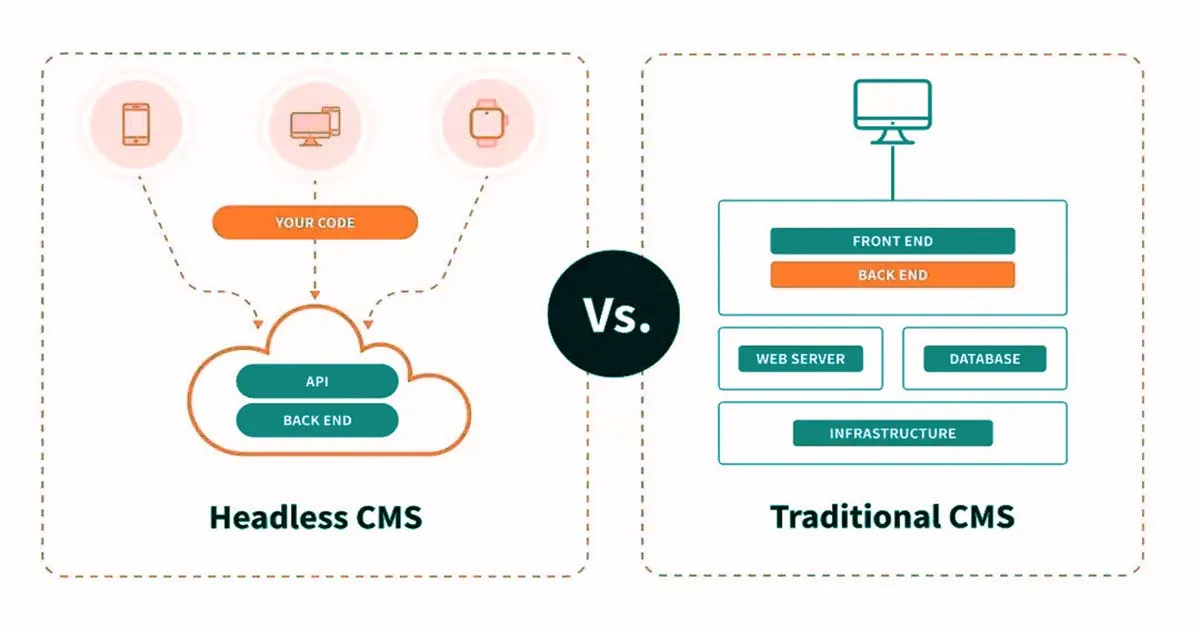
Choosing the right Content Management System (CMS) is a critical decision that directly impacts your website's performance, scalability, and user experience. Two major approaches dominate the modern web landscape: Headless CMS and Traditional CMS.
Understanding their differences, advantages, and limitations will help you make the right choice for your project.
What is a Traditional CMS?
A Traditional CMS (also known as a monolithic CMS) combines both the backend (content management) and frontend (presentation layer) into a single system.
Popular examples include WordPress, Joomla, and Drupal.
How it works
Content is created and stored in the backend
The CMS controls how content is displayed
Themes/templates define the website design
Key Characteristics
All-in-one solution
Built-in templates and plugins
Easier setup for beginners
What is a Headless CMS?
A Headless CMS separates the content management backend from the frontend presentation layer.
Content is delivered via APIs (usually REST or GraphQL), allowing developers to use any frontend technology, e.g., React, Vue, Angular, Next.js, or mobile apps.
How it works
Content is stored in the backend
Delivered via APIs
Frontend is built independently
Key Characteristics
API-first approach
Frontend flexibility
Omnichannel content delivery
Key Differences Between Headless and Traditional CMS
Feature | Traditional CMS | Headless CMS |
|---|---|---|
Architecture | Monolithic | Decoupled |
Frontend Control | Limited | Full flexibility |
Performance | Moderate | High |
Scalability | Limited | Highly scalable |
Content Delivery | Web only | Omnichannel |
Developer Flexibility | Low | High |
Pros of Traditional CMS
Traditional CMS platforms are still widely used because of their simplicity and accessibility.
1. Easy to Use
Non-technical users can quickly create and manage content without coding knowledge.
2. Faster Setup
You can launch a website quickly using themes and plugins.
3. Cost-Effective
Lower initial development costs, especially for small businesses.
4. Built-in Features
Includes SEO tools, media management, and plugins out of the box.
Cons of Traditional CMS
1. Limited Flexibility
Customization is restricted by themes and platform constraints.
2. Performance Issues
Heavier systems can slow down website performance, especially with many plugins.
3. Security Risks
Popular CMS platforms are common targets for cyberattacks.
4. Scalability Challenges
Difficult to scale for large or complex applications.
Pros of Headless CMS
Headless CMS is gaining popularity, especially for modern digital experiences.
1. High Flexibility
Developers can use any frontend framework or technology.
2. Better Performance
Content is delivered via APIs, often faster and optimized.
3. Omnichannel Delivery
Publish content across websites, apps, IoT devices, and more.
4. Improved Scalability
Ideal for large-scale and enterprise-level applications.
5. Enhanced Security
Separation of frontend and backend reduces the attack surface.
Cons of Headless CMS
1. Higher Development Cost
Requires skilled developers for setup and maintenance.
2. No Built-in Frontend
You must build the frontend from scratch.
3. Complex Implementation
Not beginner-friendly compared to traditional CMS.
4. Content Preview Challenges
Editors may find it harder to visualize content before publishing.
When to Choose a Traditional CMS
A Traditional CMS is ideal if:
You need a simple website or blog
You have a limited budget
You want quick deployment
You don't require advanced customization
When to Choose a Headless CMS
A Headless CMS is the better choice if:
You need high performance and speed
You are building a web app or SaaS platform
You require omnichannel content delivery
You want full control over frontend design
Final Thoughts
Both Headless and Traditional CMS solutions have their place in modern web development. If your priority is ease of use and quick setup, a Traditional CMS is the way to go. However, if you're aiming for scalability, flexibility, and high performance, a Headless CMS is the future-proof choice.
The right decision ultimately depends on your business goals, technical requirements, and long-term vision.
Frequently Asked Questions (FAQs)
1. Is Headless CMS better than Traditional CMS?
Not always. Headless CMS is better for scalability and flexibility, while Traditional CMS is ideal for simple websites and quick setups.
2. Does Headless CMS improve website performance?
Yes, it can significantly improve performance since content is delivered via APIs and optimized frontends.
3. Is Headless CMS good for SEO?
Yes, but it requires proper implementation. Unlike Traditional CMS, SEO features must often be configured manually.
4. Which CMS is more secure?
Headless CMS is generally more secure due to its decoupled architecture.
5. Can beginners use Headless CMS?
It's not beginner-friendly. It typically requires development expertise.
Tagged in

Written by
Madhavendra DuttI build modern, high-performance websites and provide secure hosting and strategic digital marketing solutions that help businesses grow online. My focus is on clean development, speed, reliability, and measurable results.
View all posts →Related Posts
Continue exploring similar topics
Compare FastAPI and Laravel across performance, async APIs, scalability, AI integration, d...
Node.js or Laravel for backend APIs? Compare performance, concurrency, scalability, develo...
See how we replaced spreadsheets, messages, and manual approvals with a centralized orderi...