How We Optimize Websites for Speed and Scalability

Website performance is no longer optional. In today’s competitive digital landscape, speed directly impacts user experience, search engine rankings, and conversion rates. At the same time, scalability determines whether your website can handle traffic spikes without crashing or slowing down.
In this guide, we explain our structured approach to optimizing websites for both speed and long-term scalability.
Why Speed and Scalability Matter
A slow website increases bounce rate and reduces engagement. Search engines also consider performance signals when ranking pages. Beyond SEO, speed influences how users perceive your brand - a fast site builds trust.
Scalability ensures that as your business grows, your website can handle increased traffic, database load, and concurrent users without performance degradation.
We treat performance optimization as a multi-layered strategy rather than a single technical tweak.
Step 1: Performance Audit and Benchmarking
Before making improvements, we analyze the current performance baseline. This includes measuring:
Server response time (TTFB)
Core Web Vitals
Page load speed (mobile & desktop)
Database query performance
Resource loading patterns
We identify bottlenecks such as unoptimized images, heavy scripts, slow database queries, or poor hosting infrastructure.
This audit allows us to prioritize high-impact optimizations first.
Step 2: Hosting and Infrastructure Optimization
Many performance issues originate from inadequate hosting.
We ensure the website runs on:
Optimized server stack (Nginx + PHP-FPM tuning)
HTTP/2 or HTTP/3 enabled configuration
Proper resource allocation (CPU, RAM)
Choosing between managed and unmanaged hosting also affects maintenance effort and operational control.
For high-growth businesses, we implement cloud hosting environments that allow horizontal and vertical scaling.
Scalable hosting ensures your site performs consistently during traffic spikes, marketing campaigns, or seasonal demand.
Step 3: Server-Level Optimization
Server configuration plays a critical role in performance.
We optimize:
Nginx caching rules
Gzip or Brotli compression
Browser caching headers
Keep-alive settings
Request rate limiting for security
By reducing unnecessary server processing, we improve response time and reduce load under traffic stress.
Step 4: Front-End Performance Optimization
Front-end improvements significantly reduce load time.
We focus on:
Image compression and WebP conversion
Lazy loading images and videos
Minifying CSS, JavaScript, and HTML
Eliminating render-blocking resources
Reducing unused JavaScript
We also ensure responsive design implementation so mobile users experience optimized performance.
Step 5: Database Optimization
As traffic grows, database efficiency becomes critical.
We improve performance by:
Indexing frequently queried columns
Removing redundant data
Optimizing slow queries
Implementing database caching
Monitoring query load
Our MySQL vs MariaDB comparison can help when selecting the database platform.
A well-optimized database ensures faster content delivery and reduces server strain.
Step 6: Caching Strategy
Caching is one of the most powerful speed optimization techniques.
We implement:
Server-side caching
Object caching
CDN integration
Browser caching policies
Edge caching for static resources
Proper caching drastically reduces server load and speeds up content delivery worldwide.
Step 7: Security and Performance Balance
Security misconfigurations can slow websites. We ensure:
Optimized SSL configuration
Firewall rules without performance impact
DDoS mitigation planning
Automated backups
A secure infrastructure must also remain fast and efficient.
Step 8: Continuous Monitoring and Scaling
Optimization is not a one-time task.
We continuously monitor:
Server load
Uptime
Traffic patterns
Error logs
Performance metrics
When traffic grows, we scale infrastructure accordingly - whether through vertical scaling (adding resources) or horizontal scaling (adding more servers).
Our Optimization Framework in Action
By combining hosting optimization, server tuning, front-end performance improvements, and database efficiency, we create websites that:
Load in under 2 seconds
Handle traffic spikes smoothly
Improve search engine rankings
Deliver a better user experience
Increase conversions
Speed drives engagement. Scalability supports growth.
Both are essential for long-term digital success.
Frequently Asked Questions (FAQ)
1. How long does website speed optimization take?
It depends on the website size and complexity. Basic improvements can be completed within a few days, while advanced infrastructure scaling may take longer.
2. Does website speed affect SEO rankings?
Yes. Search engines use performance metrics as ranking signals. Faster websites typically achieve better visibility and user engagement.
3. What is the ideal page load time?
Ideally under 2-3 seconds on mobile devices. The faster, the better.
4. Can shared hosting handle high traffic?
Shared hosting may struggle during traffic spikes. For scalable performance, VPS, cloud hosting, or dedicated servers are recommended.
5. How often should performance audits be conducted?
We recommend quarterly audits or immediately after major website updates.
Tagged in

Written by
Madhavendra DuttI build modern, high-performance websites and provide secure hosting and strategic digital marketing solutions that help businesses grow online. My focus is on clean development, speed, reliability, and measurable results.
View all posts →Related Posts
Continue exploring similar topics
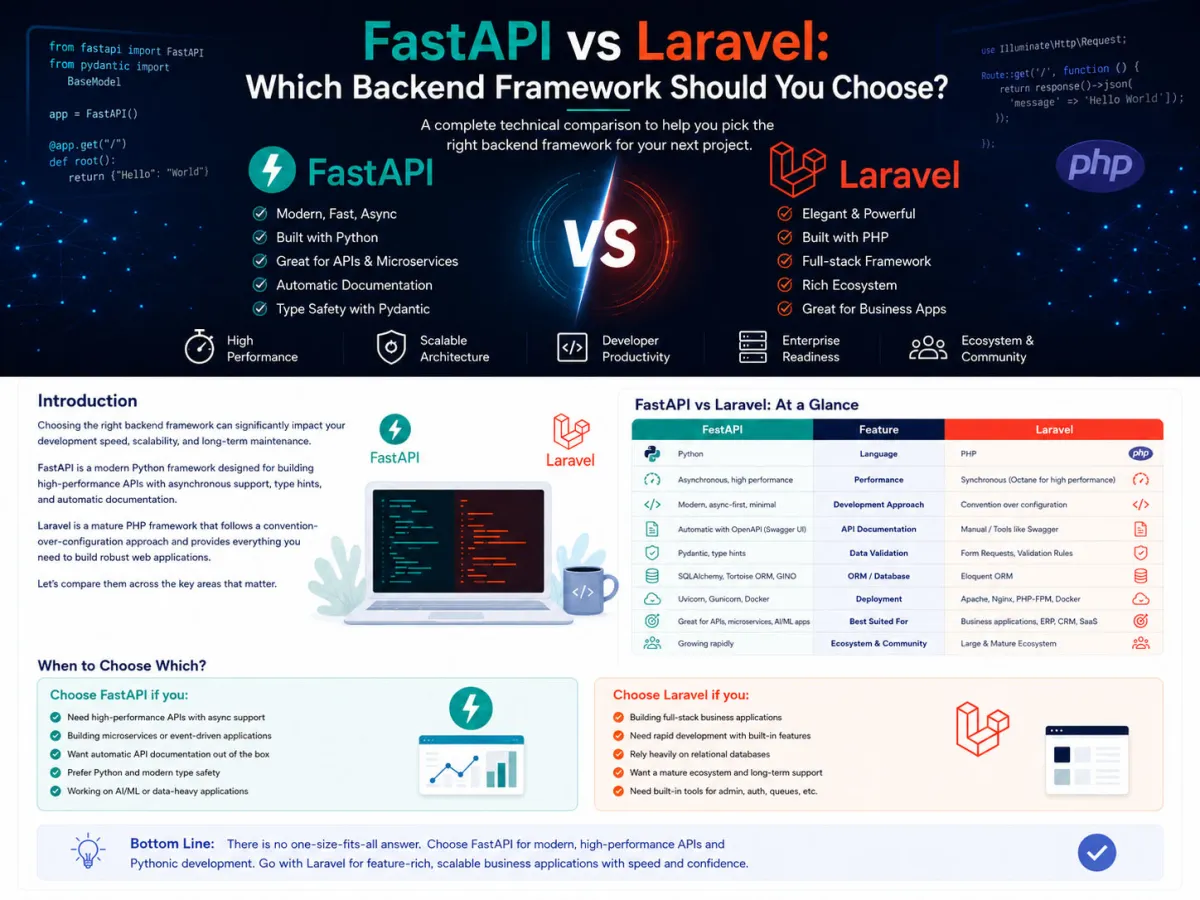
Compare FastAPI and Laravel across performance, async APIs, scalability, AI integration, d...

Node.js or Laravel for backend APIs? Compare performance, concurrency, scalability, develo...
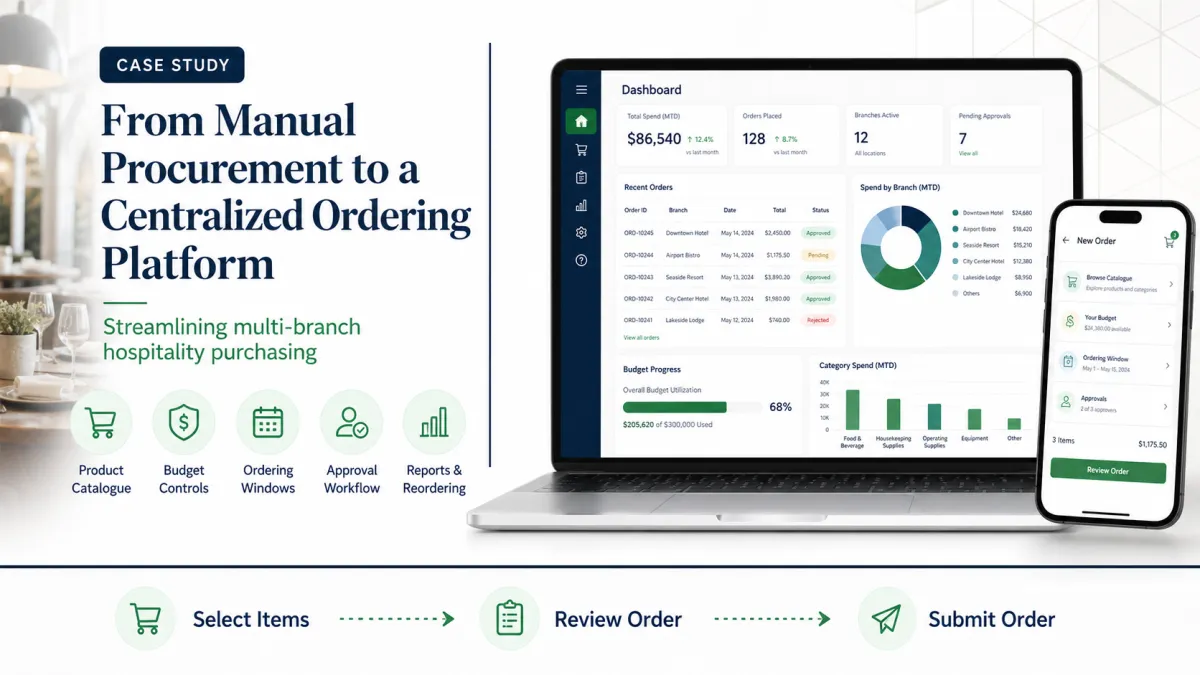
See how we replaced spreadsheets, messages, and manual approvals with a centralized orderi...