Why Custom Websites Outperform Templates (And When You Should Choose One)
Introduction
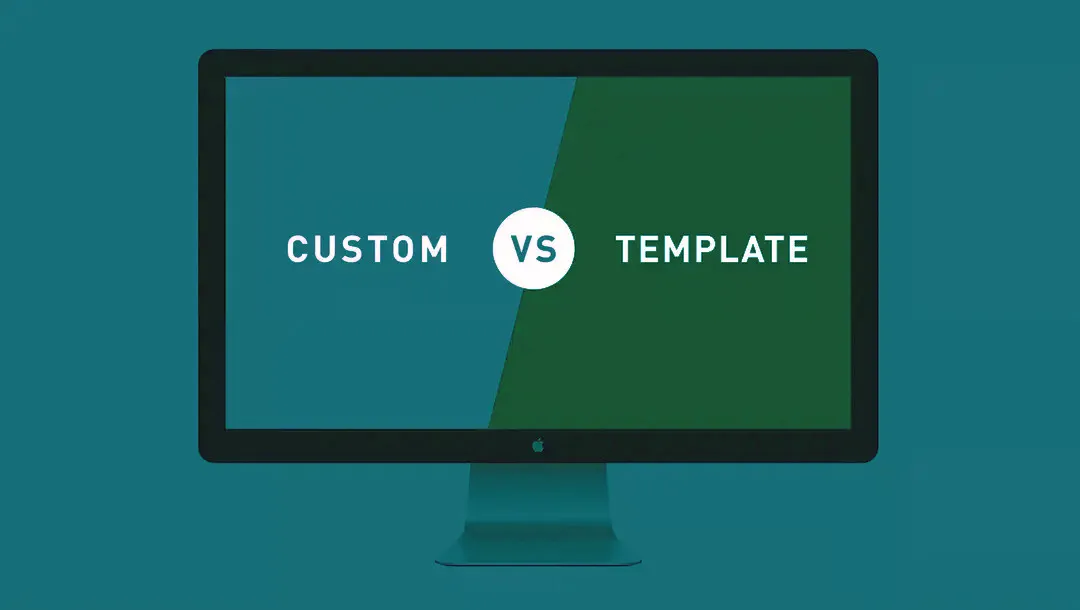
When building a website, one of the biggest decisions businesses face is whether to use a pre-built template or invest in a custom website.
Templates are attractive because they are fast and inexpensive. However, businesses that want long-term growth, better SEO performance, and a unique brand presence often choose custom web development instead.
For a broader decision framework, compare no-code and custom development.
In this article, we’ll explore why custom websites outperform templates and help you decide which option is best for your business.
What Is a Template Website?
A template website is built using a pre-designed layout that can be customized slightly with your content, images, and colors.
These templates are commonly used in platforms like WordPress, Shopify, or website builders.
Common characteristics of template websites include:
Pre-designed layouts
Limited customization
Faster setup
Lower upfront cost
Shared codebase used by thousands of websites
Templates are great for small projects or quick launches, but they often come with limitations.
What Is a Custom Website?
A custom website is built from scratch based on your specific business requirements.
Developers design the layout, features, and functionality specifically for your brand, target audience, and goals.
Custom websites typically include:
Tailored UI/UX design
Optimized code
Custom functionality
Advanced performance optimization
While they require more time and investment, custom websites provide far greater flexibility and long-term value.
1. Unique Design That Reflects Your Brand
One of the biggest problems with templates is a lack of uniqueness. Thousands of websites can look nearly identical because they use the same template.
Custom websites, on the other hand, are designed specifically for your brand identity.
This allows you to:
Create a memorable visual experience
Build stronger brand recognition
Stand out from competitors
Align design with your marketing strategy
A unique design improves trust and helps convert visitors into customers.
2. Better Website Performance
Templates often include unnecessary scripts, plugins, and design elements that slow down the website.
Because templates must work for many different use cases, they often contain bloated code.
Custom websites are optimized for:
Efficient code
Reduced server requests
Better Core Web Vitals
Faster websites improve both user experience and search engine rankings.
3. Improved SEO Capabilities
Search engine optimization (SEO) is critical for long-term organic traffic.
Template websites sometimes limit your control over technical SEO elements, such as:
Clean URL structures
Schema markup
Page speed optimization
Mobile responsiveness
Custom metadata control
With a custom website, developers can build the site with SEO best practices from the ground up, making it easier to rank in search engines.
4. Greater Scalability for Business Growth
Businesses evolve over time, and your website needs to grow with it.
Template websites often struggle when you try to add advanced features like:
Custom dashboards
Integrations with external APIs
Complex booking systems
Membership portals
Custom automation
Custom websites are built with scalability in mind, allowing you to add features as your business grows.
5. Enhanced Security
Security is a major concern for modern websites.
Hackers often target template themes and plugins because they are widely used.
Custom websites offer stronger security because:
The codebase is unique
There are fewer third-party vulnerabilities
Security practices can be built into the architecture
This significantly reduces the risk of common attacks.
6. Better User Experience (UX)
Templates force businesses to adapt their content to the template structure.
Custom websites do the opposite - they design the structure around the user journey.
This leads to:
Better navigation
Improved conversion rates
Optimized user flows
More engaging interactions
A well-designed user experience can dramatically increase leads and sales.
7. Long-Term Cost Efficiency
Templates may seem cheaper initially, but businesses often end up paying more over time due to:
Performance issues
Plugin conflicts
Design limitations
Frequent redesigns
A custom website is a long-term investment that avoids many of these problems.
When Template Websites Make Sense
Despite their limitations, templates can still be useful in certain situations.
Templates work well for:
Personal blogs
Small startup websites
Temporary landing pages
Very small businesses with limited budgets
However, growing businesses usually outgrow template solutions quickly.
When You Should Choose a Custom Website
Custom web development is the better choice if you want:
A unique brand presence
Better SEO performance
Faster website speed
Advanced functionality
Long-term scalability
Businesses serious about digital growth often benefit significantly from custom development.
Final Thoughts
Templates can be a good starting point, but they often limit performance, customization, and scalability.
Custom websites provide:
Better SEO
Faster performance
Stronger security
Unique branding
Scalability for growth
For businesses that rely on their website for leads, sales, or brand authority, investing in a custom website is often the smarter long-term strategy.
Frequently Asked Questions (FAQ)
Are custom websites better for SEO?
Yes. Custom websites allow developers to implement technical SEO best practices such as optimized code, faster loading speeds, structured data, and better URL structures.
Are template websites bad?
Not necessarily. Templates can be useful for small projects or quick launches, but they may lack flexibility, scalability, and performance optimization.
How much does a custom website cost?
The cost varies depending on features, design complexity, and development requirements. However, custom websites usually require a higher upfront investment compared to templates.
Can a template website be converted into a custom website later?
Yes, but it often requires significant redevelopment. In many cases, building a custom website from scratch is more efficient.
Do custom websites load faster?
Typically yes. Custom websites can be optimized specifically for performance, while templates often contain unnecessary code that slows them down.
Tagged in

Written by
Madhavendra DuttI build modern, high-performance websites and provide secure hosting and strategic digital marketing solutions that help businesses grow online. My focus is on clean development, speed, reliability, and measurable results.
View all posts →Related Posts
Continue exploring similar topics
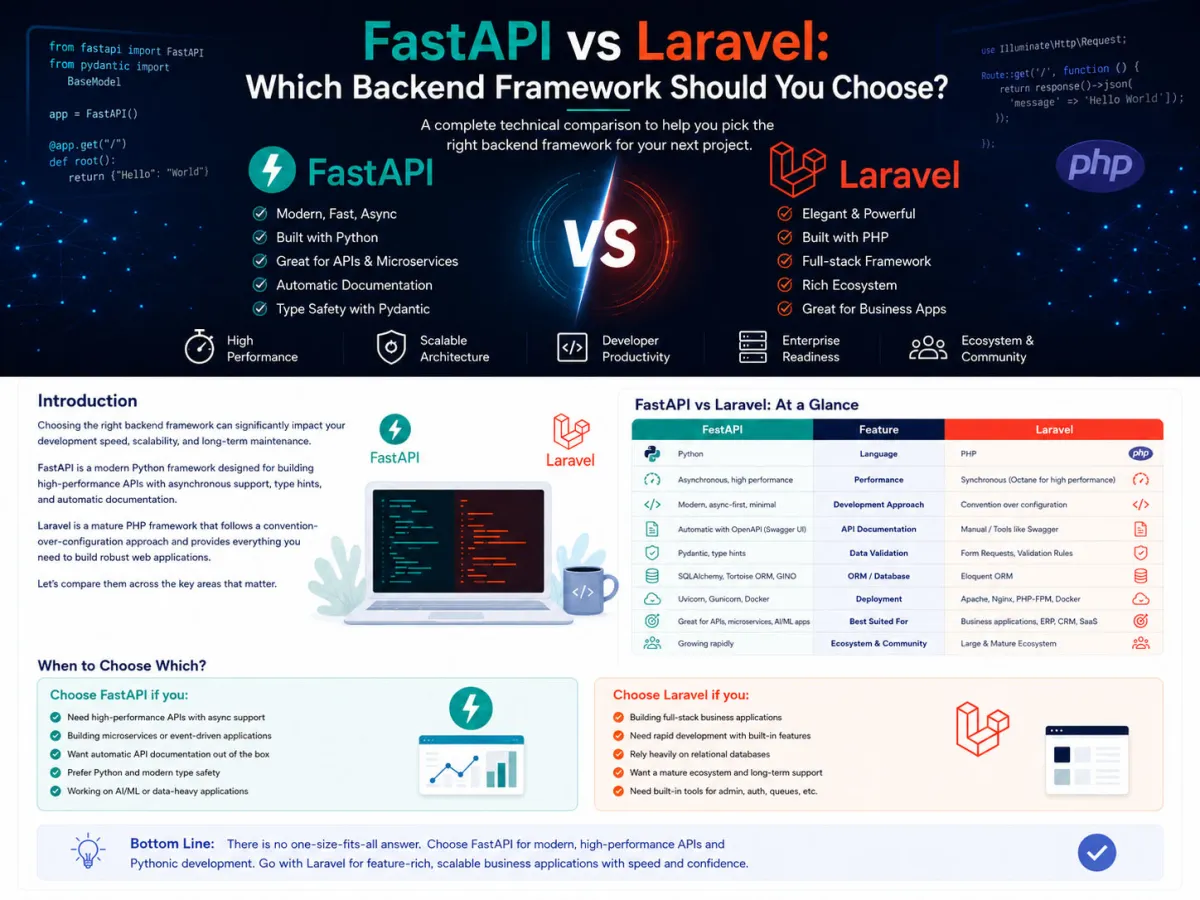
Compare FastAPI and Laravel across performance, async APIs, scalability, AI integration, d...
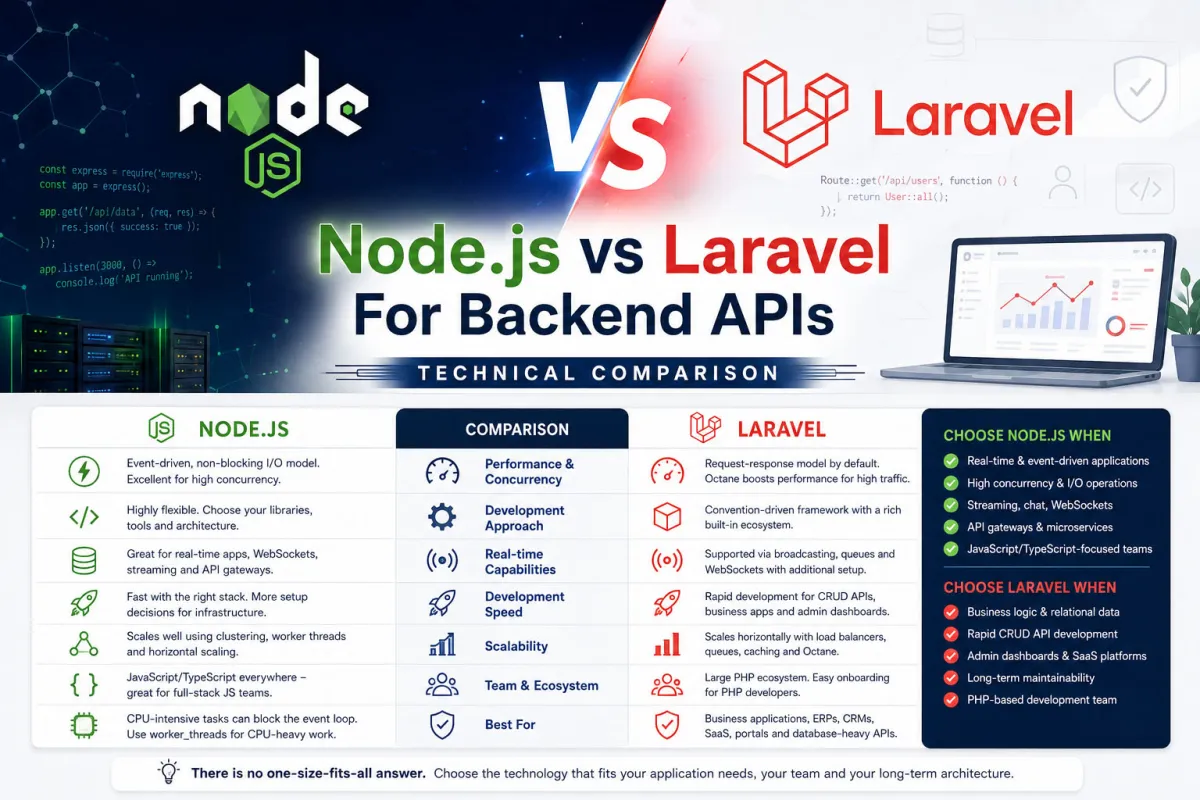
Node.js or Laravel for backend APIs? Compare performance, concurrency, scalability, develo...
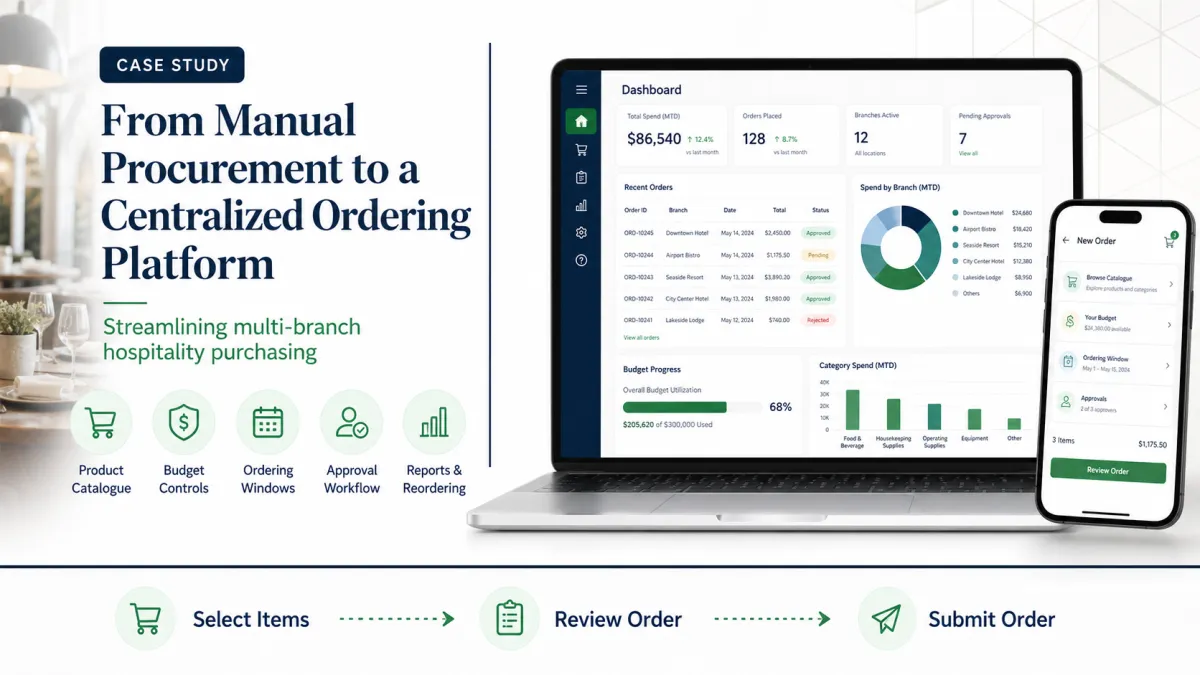
See how we replaced spreadsheets, messages, and manual approvals with a centralized orderi...