Modern Web Development Stack Explained (Laravel, React, Next.js, APIs, etc.)

The modern web development stack has evolved significantly in the last few years. Businesses today no longer rely on simple static websites — they need fast, scalable, secure, and highly interactive web applications. This is where modern technologies like Laravel, React, Next.js, and APIs come together to build powerful digital platforms.
Whether you are planning a business website, SaaS platform, or a custom web application, understanding the modern web stack can help you make the right technology decisions.
What is a Modern Web Development Stack?
A modern web development stack refers to the combination of technologies used to build a website or web application, including:
Backend framework
Frontend framework
Database
API layer
Hosting & performance optimization tools
Instead of using one single technology, developers now use specialized tools that work together to deliver better performance and user experience.
Backend: Why Laravel is One of the Most Popular Choices
Laravel is one of the most powerful backend frameworks used in modern website development. It helps developers build secure and scalable applications quickly.
Laravel is widely used for:
Custom web applications
Business portals
Admin dashboards
E-commerce platforms
API development
The biggest advantage of Laravel is that it saves development time while maintaining clean and structured code. It also includes built-in features like authentication, security protection, and database management.
Clean architecture matters as a stack grows; applying SOLID principles helps keep the code maintainable.
Database choice matters too—our MySQL vs MariaDB comparison explains the practical trade-offs.
Another reason Laravel is part of the modern web stack is its strong support for APIs, which allows it to work smoothly with frontend frameworks like React and Next.js.
Frontend: Why React is Used in Modern Websites
Modern websites are no longer static pages. Users expect fast loading speed, smooth animations, and real-time interaction. This is where React plays a major role.
React allows developers to create dynamic user interfaces that feel fast and responsive. Instead of reloading the entire page, React updates only the necessary parts of the screen. This improves both user experience and website performance.
React is commonly used in:
SaaS dashboards
E-commerce websites
Booking systems
Custom business tools
Progressive web apps
Because of its speed and flexibility, React has become a standard technology in custom web development projects.
Next.js: The Best Solution for SEO-Friendly Modern Websites
One challenge with modern frontend frameworks is SEO. Many JavaScript websites struggle to rank on Google because search engines cannot properly read dynamic content.
Next.js solves this problem by combining the benefits of React with server-side rendering and fast page loading. This makes it ideal for businesses that want both:
A modern UI
Strong SEO performance
Next.js is especially useful for:
SEO-optimized business websites
High-performance landing pages
Blog platforms
Marketing websites
Fast-loading company websites
APIs: The Backbone of Modern Web Development
APIs (Application Programming Interfaces) connect the frontend and backend together. Instead of building everything in one system, developers now create separate frontend and backend applications that communicate through APIs.
This approach offers several advantages:
Faster performance
Better security
Easier scalability
Mobile app compatibility
Faster feature development
For example, a modern web application may use:
Laravel as the backend
React or Next.js as the frontend
REST API or GraphQL to connect both
This structure is now considered the industry standard.
Why Businesses Should Use a Modern Web Stack
A modern web development stack is not just a technical upgrade — it directly impacts business growth.
Websites built using modern technologies are:
Faster and more responsive
Better optimized for SEO
Easier to scale in the future
More secure
Better for user experience
More compatible with mobile devices
For businesses that want long-term growth, investing in a modern web development stack is one of the smartest decisions.
When Should You Upgrade to a Modern Web Stack?
You should consider upgrading your website if:
Your website is slow
It is not ranking on Google
It does not work properly on mobile devices
It looks outdated
It is difficult to update content
It cannot handle high traffic
Upgrading to modern technologies like Laravel and Next.js can significantly improve performance, SEO ranking, and user engagement.
Final Thoughts
Modern web development is no longer about just building a website — it is about building a fast, scalable, and SEO-optimized digital platform.
Technologies like Laravel, React, Next.js, and APIs are shaping the future of web development. Businesses that adopt these technologies early gain a competitive advantage in terms of speed, performance, and search engine ranking.
If you are planning a new website or upgrading an existing one, choosing the right technology stack is the first step toward long-term success.
FAQs: Modern Web Development Stack
What is the best modern web development stack?
One of the most popular modern stacks today includes Laravel for backend development, React or Next.js for frontend development, and APIs to connect both.
Is Laravel still relevant in 2026?
Yes, Laravel is still one of the most widely used frameworks for custom web development and API development because of its security, flexibility, and scalability.
Is React better than traditional website development?
React is much faster and more flexible than traditional website development because it allows dynamic content updates without reloading the page.
Is Next.js good for SEO?
Yes, Next.js is one of the best frameworks for SEO-friendly modern websites because it supports server-side rendering and fast loading speed.
Should small businesses use a modern web stack?
Yes. Even small businesses benefit from faster websites, better SEO, and improved user experience when using modern technologies.
Tagged in

Written by
Madhavendra DuttI build modern, high-performance websites and provide secure hosting and strategic digital marketing solutions that help businesses grow online. My focus is on clean development, speed, reliability, and measurable results.
View all posts →Related Posts
Continue exploring similar topics
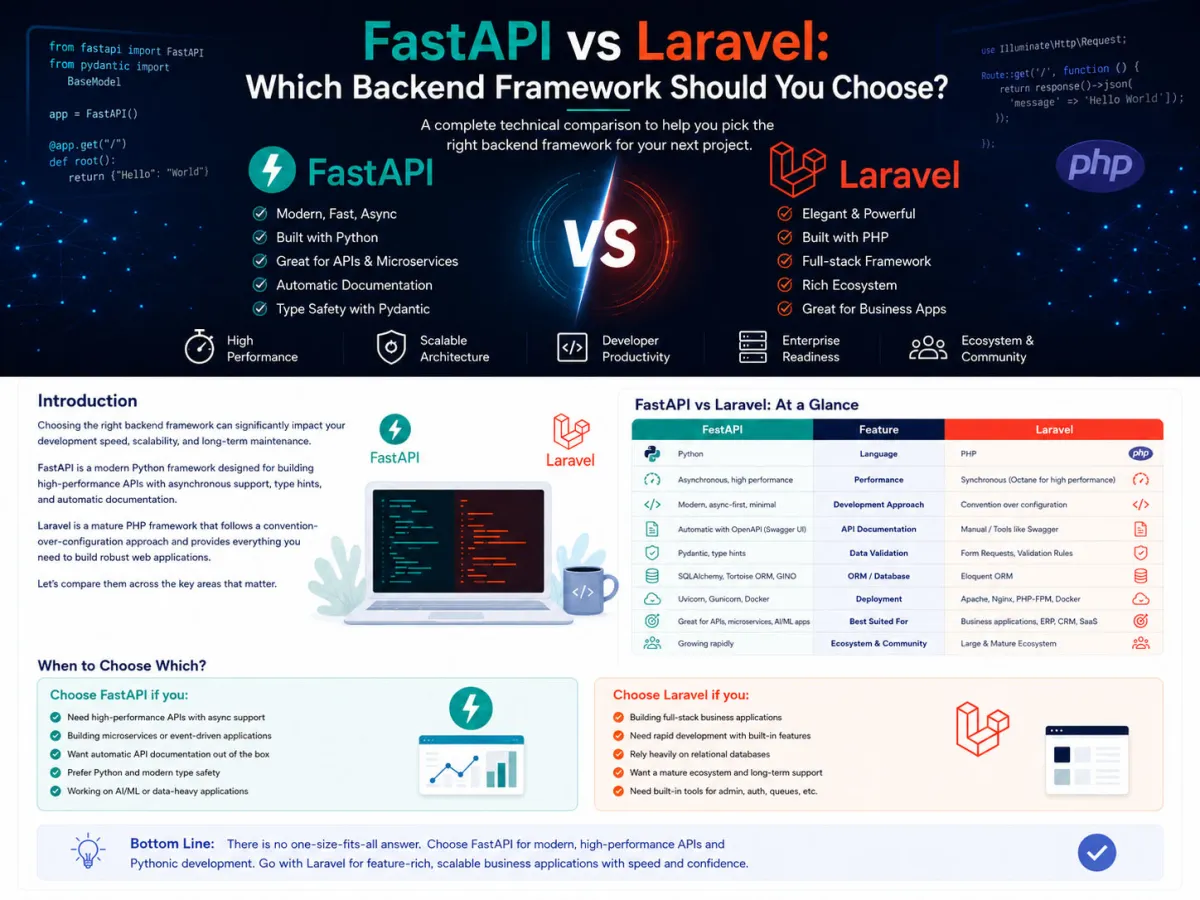
Compare FastAPI and Laravel across performance, async APIs, scalability, AI integration, d...
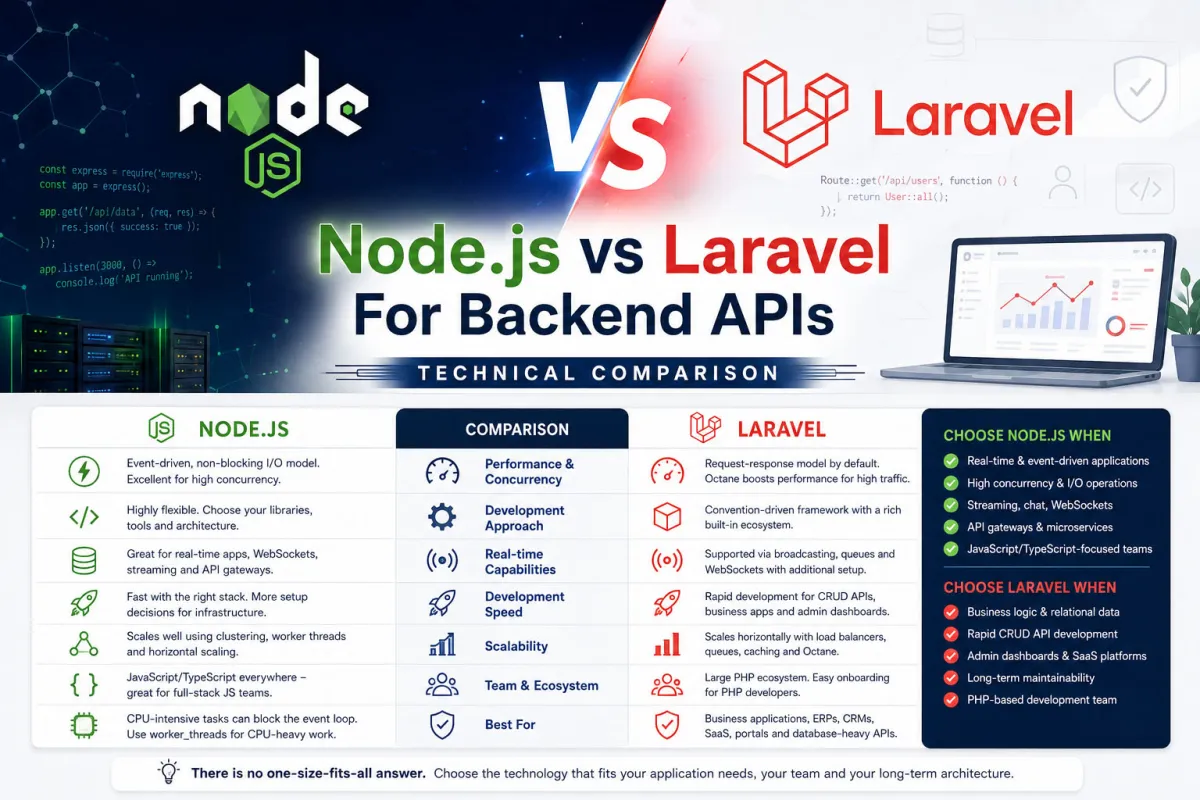
Node.js or Laravel for backend APIs? Compare performance, concurrency, scalability, develo...
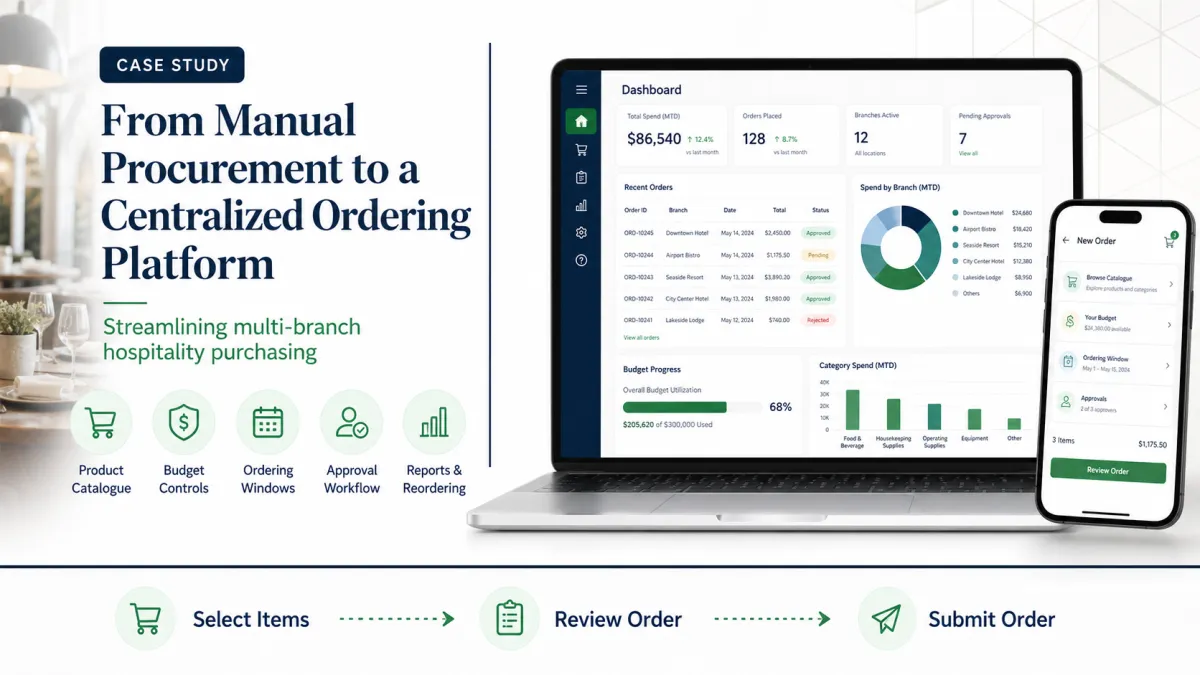
See how we replaced spreadsheets, messages, and manual approvals with a centralized orderi...