MySQL vs MariaDB Explained: Performance, Features & Use Cases

MySQL vs MariaDB: Which Database Should Developers Use in 2026?
Choosing the right database is one of those decisions that seems simple-until it isn’t. If you’re a developer working with relational databases, you’ve almost certainly faced the MySQL vs MariaDB dilemma.
They look similar. They share history. They even support the same SQL syntax in many cases.
So… what’s the real difference between MySQL and MariaDB, and which one should you use?
Let’s break it down from a developer’s perspective - performance, features, licensing, compatibility, and real-world use cases - so you can confidently choose the right tool for your next project.
Key Differences Between MySQL and MariaDB
1. Performance and Storage Engines
MariaDB includes more storage engines out of the box than MySQL.
Notable MariaDB engines:
Aria (crash-safe alternative to MyISAM)
ColumnStore (analytics and data warehousing)
MyRocks (optimized for write-heavy workloads)
MySQL focuses primarily on InnoDB, which is extremely stable and well-optimized, but less flexible.
Developer takeaway:
If you’re building high-performance, write-heavy, or analytics-heavy systems, MariaDB offers more tuning options.
2. Replication and Clustering
MariaDB supports advanced replication features such as:
Galera Cluster (multi-master replication)
Parallel replication (earlier and more flexible than MySQL)
Global transaction IDs (GTIDs) with more customization
MySQL has improved replication significantly, especially in recent versions, but Galera is not native.
Use MariaDB when:
You need easy high availability and multi-master setups.
Use MySQL when:
You rely on Oracle’s MySQL replication tooling or managed MySQL services.
3. Licensing and Open-Source Philosophy
This is a big one.
MySQL uses a dual-license model (GPL + commercial licenses owned by Oracle)
MariaDB is fully GPL and community-driven
Some MySQL enterprise features are closed-source or paid.
If open source purity matters, MariaDB is the safer long-term choice.
4. Feature Velocity and Innovation
MariaDB tends to ship new features faster, including:
Window functions (earlier than MySQL)
Advanced JSON features
Dynamic columns
Better optimizer enhancements
MySQL prioritizes stability and backward compatibility, which is great for enterprise environments, but slower for innovation.
MariaDB feels more "developer-first"
MySQL feels more "enterprise-first"
5. Compatibility and Migration
MariaDB markets itself as a drop-in replacement for MySQL, and for most applications, that’s true.
However:
Some MySQL-specific features (especially newer ones) may not exist in MariaDB
SQL behavior can differ subtly in edge cases
Stored procedures and replication setups should be tested carefully
Rule of thumb:
MySQL → MariaDB is usually easier than MariaDB → MySQL.
When Should You Use MySQL?
Choose MySQL if:
You’re using managed cloud services like Amazon RDS MySQL or Oracle Cloud
Your organization already standardizes on MySQL
You want maximum vendor support and documentation
Stability matters more than cutting-edge features
You rely on MySQL-specific enterprise tooling
Best fit:
Enterprise apps, legacy systems, and SaaS platforms are already deep in the MySQL ecosystem.
When Should You Use MariaDB?
Choose MariaDB if:
You value open-source governance
You want better performance tuning options
You need advanced replication or clustering
You’re running self-hosted infrastructure
You care about faster innovation cycles
Best fit:
Startups, modern web apps, high-traffic systems, Linux-centric stacks.
Performance: MySQL vs MariaDB Benchmarks
Real-world benchmarks vary by workload, but generally:
Read-heavy workloads: Similar performance
Write-heavy workloads: MariaDB often wins
Complex queries: MariaDB optimizer improvements can outperform MySQL
Simple CRUD apps: No noticeable difference
Always benchmark with your own workload. Database performance is context-dependent.
Community and Ecosystem
MySQL: Backed by Oracle, massive install base, strong enterprise presence
MariaDB: Active open-source community, Linux distro default (Ubuntu, Debian, Fedora)
Notably, many Linux distributions switched from MySQL to MariaDB by default, which says a lot about trust and stability.
Final Verdict: MySQL or MariaDB?
There is no universal winner, but there is a better choice for your use case.
Choose MySQL if you want:
Stability, enterprise support, and deep integration with managed services.
Choose MariaDB if you want:
Freedom, performance flexibility, and an open-source-first future.
For most new projects, especially self-hosted or open-source-friendly ones, MariaDB is increasingly the better default.
TL;DR for Developers
MySQL and MariaDB started together, but now serve different philosophies
MariaDB innovates faster and offers more engines
MySQL excels in enterprise and managed environments
Both are solid; your workload and ecosystem should decide
Frequently Asked Questions (FAQs)
1. Is MariaDB better than MySQL?
MariaDB offers more open-source features and flexibility, while MySQL focuses on enterprise stability. The better choice depends on your use case.
2. Can MariaDB fully replace MySQL?
In most cases, yes. MariaDB is designed as a drop-in replacement, but edge cases should be tested.
3. Which is faster, MySQL or MariaDB?
Performance depends on workload. MariaDB often performs better in write-heavy and complex queries.
4. Is MariaDB compatible with MySQL tools?
Most MySQL tools, drivers, and frameworks work seamlessly with MariaDB.

Written by
Madhavendra DuttI build modern, high-performance websites and provide secure hosting and strategic digital marketing solutions that help businesses grow online. My focus is on clean development, speed, reliability, and measurable results.
View all posts →Related Posts
Continue exploring similar topics
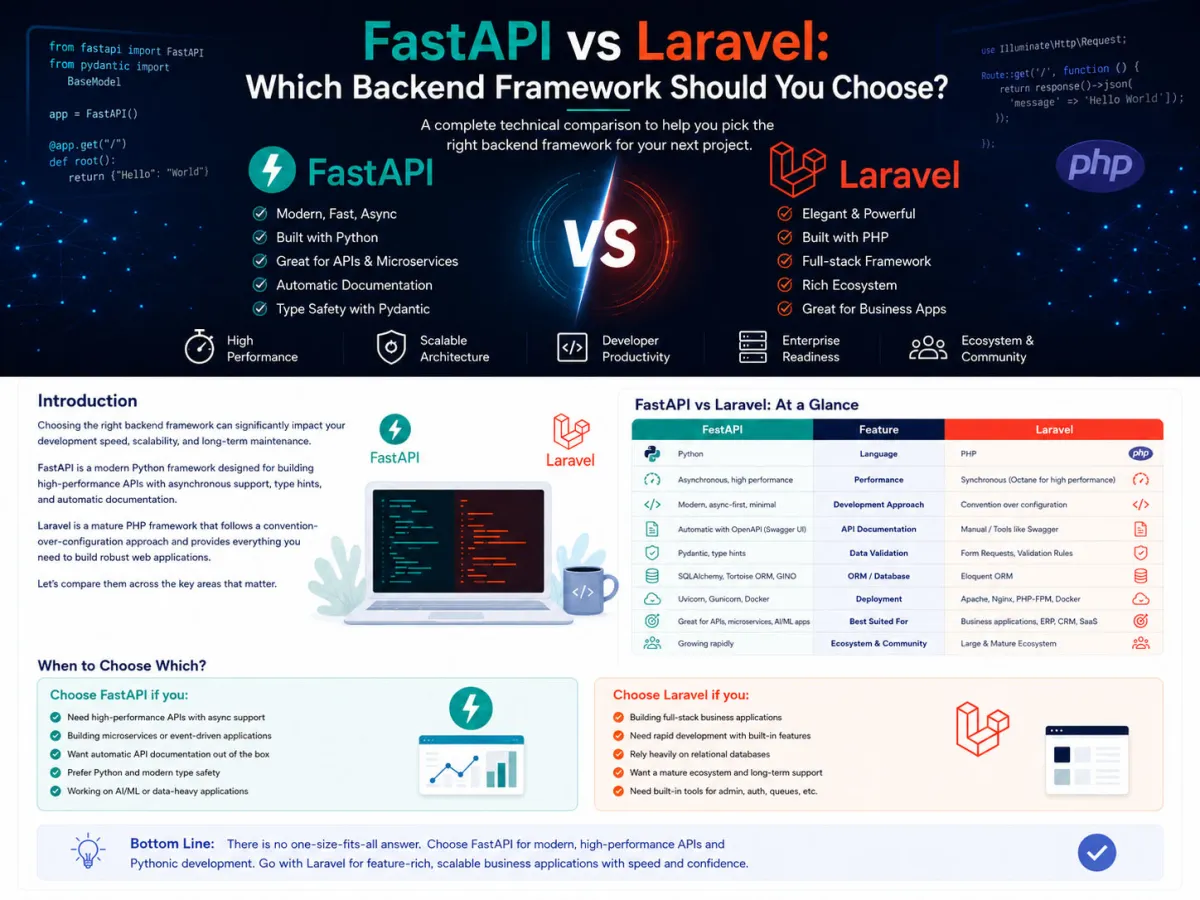
Compare FastAPI and Laravel across performance, async APIs, scalability, AI integration, d...
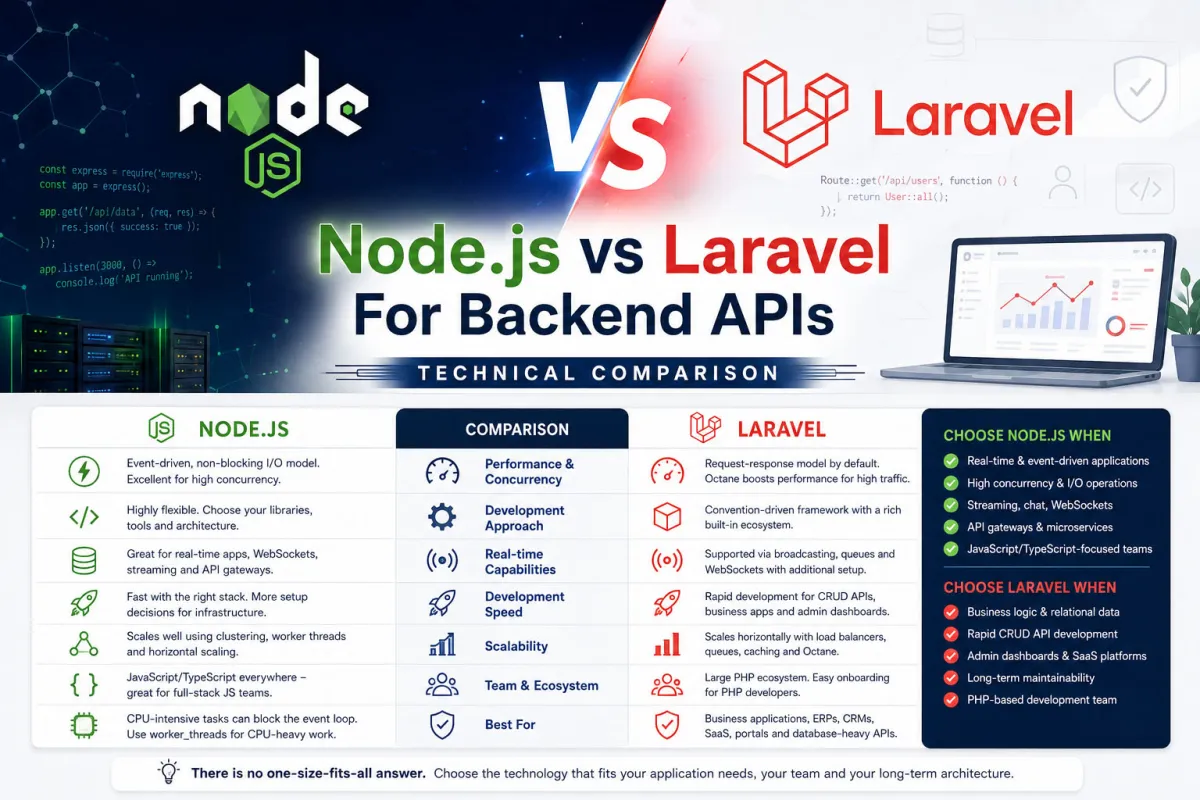
Node.js or Laravel for backend APIs? Compare performance, concurrency, scalability, develo...
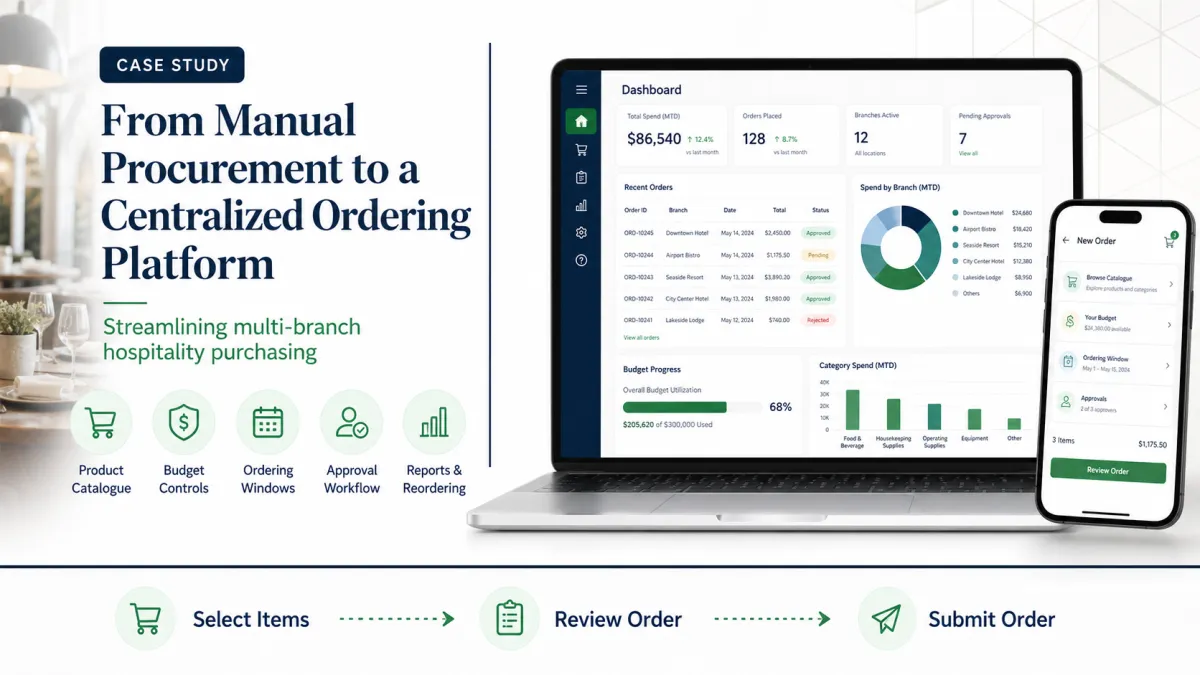
See how we replaced spreadsheets, messages, and manual approvals with a centralized orderi...