How a Professional Website Helps Small Businesses Generate More Leads
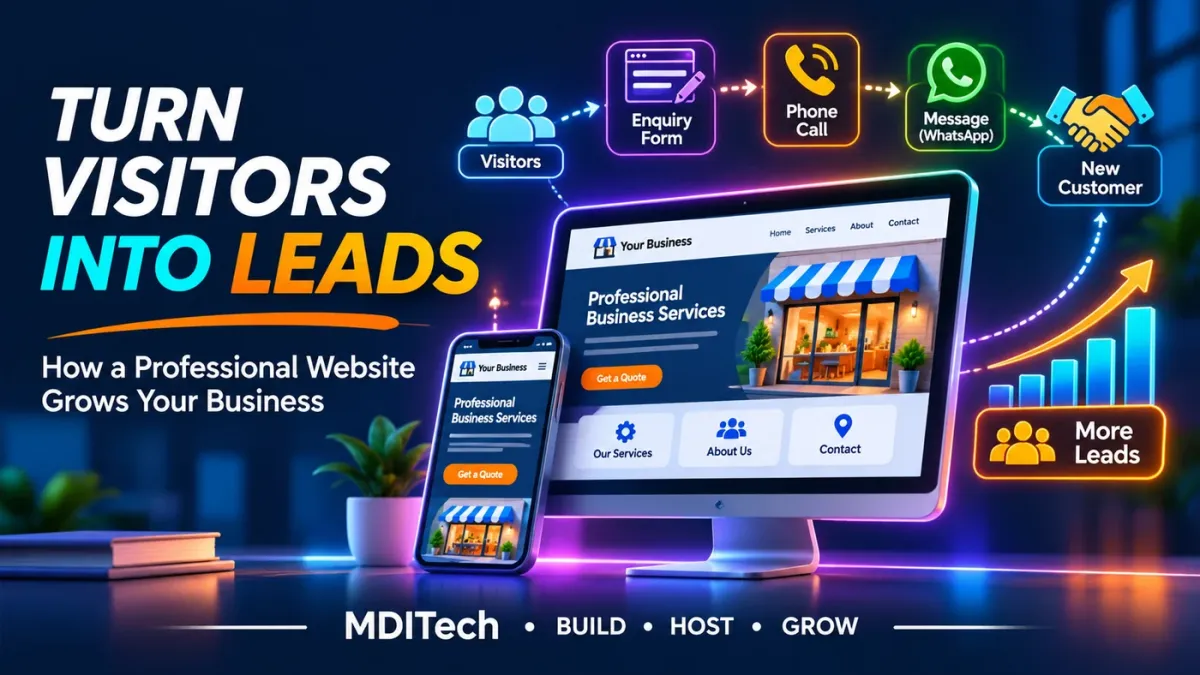
For many small businesses, finding new customers is one of the biggest challenges. Whether you operate a local clinic, consultancy, retail store, coaching institute, or service-based company, business growth depends on connecting with people who genuinely need your products or services.
Traditional marketing methods such as referrals, printed advertisements, and local networking remain valuable. However, customers increasingly research businesses online before making contact.
They search for services, compare providers, read reviews, explore websites, and evaluate whether a business appears trustworthy.
This creates an important opportunity for small businesses.
A professional website can do more than display company information. When planned correctly, it can help attract potential customers, answer their questions, establish credibility, and encourage them to enquire about your services.
However, simply having a website does not guarantee more customers.
A website must communicate the right information, provide a good user experience, and make it easy for interested visitors to take the next step.
The real value of a business website comes from its ability to turn relevant visitors into genuine customer opportunities.
At MDITech, we believe websites should be developed with clear business objectives rather than focusing only on visual appearance.
In this guide, we'll explain how a professional website supports lead generation, which features matter most, and how small businesses can improve their websites to generate more enquiries and potential sales.
What Is Website Lead Generation?
Website lead generation is the process of attracting potential customers to your website and encouraging them to express interest in your products or services.
This interest may take different forms depending on your business.
For a service provider, a lead might be someone submitting a quotation request.
For a clinic, it could be a patient requesting an appointment.
For a training institute, it might be a prospective student asking about course details.
Other examples include telephone enquiries, WhatsApp conversations, consultation requests, and demo bookings.
The goal is not simply to collect contact information. It is to connect with people whose requirements match what your business offers.
A website that receives 500 relevant visitors and generates 20 qualified enquiries may be more useful than one attracting thousands of visitors who have little interest in the business.
This is why lead generation should be evaluated through both the number and quality of enquiries.
Why Small Businesses Need a Lead-Generating Website
Small businesses often operate with limited marketing budgets and smaller sales teams.
They may not have the resources to maintain extensive advertising campaigns or employ dedicated customer acquisition specialists.
A professional website provides a centralized destination where potential customers can learn about the business at their convenience.
Unlike a physical office, the website can present service information outside normal business hours.
Visitors can review offerings, compare options, and submit enquiries whenever it suits them.
A website also gives the business greater control over its digital presentation compared with relying exclusively on third-party social media platforms.
For example, an Instagram profile may help people discover a brand, but a dedicated website can organize detailed service information, frequently asked questions, testimonials, and enquiry options in one place.
This combination of accessibility, information, and clear customer pathways creates the foundation for effective lead generation.
1. A Professional Website Builds Customer Trust
Before contacting a business, potential customers often want reassurance that the company is legitimate, capable, and suitable for their needs.
A professional website can help establish that confidence.
Clear service descriptions, accurate contact details, consistent branding, genuine photographs, and information about the business all contribute to a more credible presentation.
For example, consider two local service providers offering similar services.
One has only a brief social media profile with limited information.
The other has a professional website explaining its services, experience, service areas, customer feedback, and enquiry process.
The second business gives prospective customers more information to evaluate before contacting it.
That does not automatically make it the better provider, but it can reduce uncertainty.
Essential trust-building elements
A business website should present:
Clear company and contact information
Accurate descriptions of services
Relevant experience and credentials
Genuine customer testimonials, where available
Examples of completed work, where appropriate
Secure HTTPS connections
Transparent policies and business information
Avoid displaying fabricated reviews, unsupported achievements, or misleading guarantees.
Trust develops when a website communicates useful and accurate information consistently.
2. Search Engine Visibility Helps Customers Discover Your Business
A website cannot generate enquiries unless potential customers can find it.
Search engines provide one important discovery channel.
When people search for services, they often use phrases describing their needs and location.
For example, someone might search for a website development company in their city, a nearby accounting consultant, or a local supplier of a particular product.
A business website with relevant pages and technically accessible content may become eligible to appear in search results for appropriate queries.
This is where Search Engine Optimization (SEO) becomes important.
SEO involves improving website content, structure, and technical accessibility to help search engines understand the information provided.
However, publishing a website does not guarantee immediate indexing or prominent rankings.
Search visibility depends on many factors, including relevance, competition, content quality, and the searcher's intent.
Why local SEO matters
Local SEO is particularly valuable for small businesses serving specific geographical areas.
For example, a clinic in Varanasi may want to attract patients from nearby neighbourhoods rather than visitors from unrelated locations.
A useful website should clearly communicate its services, location, operating details, and available contact options.
Eligible businesses can also maintain accurate Google Business Profile information.
Consistent business details across relevant online platforms can help customers identify and contact the business.
MDITech's digital marketing services can complement website development with search visibility and customer acquisition activities.
3. Dedicated Service Pages Attract More Relevant Enquiries
Many small business websites make the mistake of presenting all their services within one short paragraph.
While this may save space, it can make it difficult for potential customers to understand what the business actually offers.
Dedicated service pages allow a business to explain individual offerings in greater detail.
For example, a digital services company providing website development, web hosting, and SEO can create separate pages for each service.
Someone interested specifically in hosting can then learn about that service without searching through unrelated information.
A useful service page should explain the problem being solved, the intended customers, important features or deliverables, and how to request further information.
Where appropriate, it may also include FAQs, examples, and relevant testimonials.
The goal is to answer the questions a serious potential customer is likely to ask.
A clear service page helps visitors determine whether your business is relevant to their needs before they submit an enquiry.
This can improve the quality of incoming leads and reduce unnecessary back-and-forth communication.
4. Clear Calls to Action Encourage Visitors to Contact You
A visitor may be interested in your services but still leave without contacting you.
Sometimes this happens because the website does not clearly explain what to do next.
A call to action, commonly called a CTA, guides visitors toward a meaningful action.
Examples include:
Request a Quote
Book a Consultation
Call Now
Send an Enquiry
Schedule a Demo
Contact Our Team
The best CTA depends on the business model and the customer's stage of decision-making.
For example, someone researching an expensive custom software project may prefer requesting a consultation rather than making an immediate purchase.
A customer searching for an emergency local service may prefer a visible telephone button.
CTAs should be easy to identify and positioned where they naturally support the visitor's journey.
Avoid overwhelming visitors with too many competing buttons.
A page generally benefits from one clear primary action, supported by secondary contact options where appropriate.
5. Mobile-Friendly Design Makes Enquiries Easier
Many customers access business websites using smartphones.
If your website is difficult to navigate on mobile devices, visitors may struggle to read service information or complete contact forms.
A responsive website adapts its layout to different screen sizes.
However, effective mobile design also considers how people actually interact with the website.
Buttons should be easy to tap, forms should be manageable on small screens, and important information should remain accessible.
For a local business, prominent telephone and location links may be particularly useful.
For a consultancy, a concise enquiry form may be more appropriate.
For a retail business, product discovery and checkout usability may deserve greater attention.
Mobile design should also account for loading performance and accessibility.
A visitor using a slower connection should not have to download unnecessarily large images or scripts just to access basic contact information.
A well-designed mobile experience removes barriers between customer interest and enquiry submission.
6. Contact Forms and WhatsApp Integration Reduce Communication Friction
A website should provide convenient ways for interested customers to make contact.
Some visitors prefer telephone calls, while others prefer sending a message or completing a form.
Offering appropriate contact methods helps accommodate different preferences.
For many Indian small businesses, WhatsApp can be a convenient communication channel because customers are already familiar with the platform.
However, simply displaying a WhatsApp icon does not guarantee useful enquiries.
The contact options should be clearly presented and should lead to an appropriate business-managed communication channel.
Design better enquiry forms
An effective enquiry form asks for enough information to understand the customer's requirement without creating unnecessary friction.
For a basic service enquiry, fields might include the customer's name, contact details, service of interest, and a short message.
Longer forms may be appropriate for complex projects, but every additional field should serve a clear purpose.
The website should also provide a meaningful confirmation after submission.
Behind the scenes, enquiries must be delivered reliably and protected against spam and misuse.
Collect personal information only where necessary, explain how it will be used, and handle it according to applicable privacy requirements.
7. Website Speed and Reliability Protect Potential Leads
Imagine a customer discovering your business through an advertisement and clicking through to your website.
If the page takes too long to load or fails to open, the visitor may leave before learning anything about your services.
The same problem can occur when a contact form stops working or the server becomes unavailable.
Website performance and availability therefore support lead generation by helping visitors complete their intended actions.
However, website speed depends on more than the hosting plan.
Images, frontend scripts, application code, caching, and database efficiency can all influence the user experience.
Regular performance testing can help identify problems that affect important pages.
Tools such as Google PageSpeed Insights provide useful information about loading performance and user experience.
For a deeper explanation, read How We Optimize Websites for Speed and Scalability.
Reliable hosting is also important.
A business should evaluate uptime monitoring, technical support, backups, and recovery arrangements when choosing its hosting environment.
8. Helpful Content Attracts Customers Before They Are Ready to Buy
Not every website visitor is immediately ready to submit an enquiry.
Some people are still learning about their problems, comparing solutions, or researching costs.
Educational blog articles can help businesses connect with these potential customers earlier in the decision-making process.
For example, a website development company may publish guides explaining how to plan a business website, choose hosting, or decide when a redesign is necessary.
These articles answer questions that potential clients may have before contacting a developer.
Similarly, a financial consultant might publish guides about financial planning concepts, while a local service provider could explain common customer problems.
Useful content can build familiarity and encourage visitors to explore relevant service pages.
However, blogging should not become an exercise in publishing large amounts of repetitive content.
Quality matters more than volume.
Articles should address genuine audience needs, provide accurate information, and link naturally to relevant services.
For related guidance, explore our article on what small businesses should know before building a website.
9. Testimonials and Case Studies Help Customers Make Decisions
Potential customers often want to know whether a business has successfully delivered similar work.
Relevant examples and authentic customer feedback can help answer this question.
Testimonials describe experiences from previous customers, while case studies explain the challenge, approach, and outcome of a particular project.
For example, a website development case study might explain how a business needed a more organized booking system and what features were implemented to address that requirement.
A useful case study does not need exaggerated performance claims.
It should explain the original problem, important decisions, implemented solution, and documented results.
Where client information or sensitive business details are involved, obtain appropriate permission before publishing them.
Real examples help visitors understand how services can apply to situations similar to their own.
MDITech also documents selected software projects, including the development of Society App, to explain how specific operational challenges informed product design.
10. Analytics Help Turn Website Traffic into Better Business Results
A website should be evaluated according to its contribution to business objectives.
Traffic data can show how many visitors reach your website, but visitor count alone does not explain whether the website generates meaningful opportunities.
Small businesses should track actions related to their goals.
These might include completed enquiry forms, consultation bookings, telephone link clicks, or qualified demo requests.
For online stores, completed transactions and revenue are more direct measures.
Analytics can also help reveal where visitors encounter difficulties.
For example, a service page may receive substantial traffic but generate very few enquiries.
This could indicate unclear messaging, unsuitable traffic, weak CTAs, or a form that is difficult to complete.
Instead of immediately redesigning the entire website, the business can investigate these possibilities and make focused improvements.
Tracking should respect applicable privacy requirements and the limitations of analytics tools.
Not every visitor action is captured perfectly, so website data should be considered alongside actual sales and enquiry records.
How to Calculate Your Website's Lead Conversion Rate
A lead conversion rate measures how frequently website visitors complete a defined enquiry action.
A simple formula is:
Lead Conversion Rate = (Number of Leads ÷ Number of Visitors) × 100
For example, suppose a website receives 2,000 visitors during a month and records 40 enquiries.
Its lead conversion rate would be:
(40 ÷ 2,000) × 100 = 2%
Now suppose the business improves its service pages, contact forms, and customer journey.
If the website continues receiving 2,000 visitors but generates 60 enquiries, its conversion rate increases to 3%.
That represents 20 additional enquiries without increasing website traffic.
This is a hypothetical example, not a guaranteed result.
In practice, businesses should distinguish between raw enquiries and qualified leads.
An enquiry from someone outside the service area may not have the same commercial value as one from a customer actively seeking the service.
Businesses should therefore consider both conversion rate and lead quality when evaluating website performance.
Website Features That Support Lead Generation
A professional business website does not need every possible feature.
The most useful features depend on the audience, services, and customer journey.
Website feature | How it supports lead generation |
|---|---|
Clear homepage messaging | Helps visitors quickly understand the business |
Dedicated service pages | Answers specific customer questions |
Responsive design | Makes browsing and contacting easier on mobile |
Prominent contact options | Reduces friction when visitors want to enquire |
Short enquiry forms | Makes it easier to submit relevant requests |
Testimonials and case studies | Helps establish credibility |
Local SEO information | Supports discovery by nearby customers |
Fast, reliable hosting | Helps keep important pages accessible |
Helpful blog content | Reaches customers researching related problems |
Conversion tracking | Helps identify improvement opportunities |
The objective is to create a website that supports the way customers actually research and contact your business.
Common Mistakes That Prevent Websites from Generating Leads
Many business websites struggle to generate enquiries even when they receive visitors.
One common mistake is focusing primarily on visual appearance while overlooking the customer's needs.
An attractive homepage may create a positive first impression, but if visitors cannot understand the services or find contact information, the design may not support meaningful business outcomes.
Another mistake is relying on vague calls to action.
A button labeled "Learn More" may be suitable in some contexts, but a specific action such as "Request a Consultation" can be clearer when visitors are ready to enquire.
Other problems include outdated content, unnecessarily complicated forms, poor mobile usability, and missing trust-building information.
Some businesses also invest heavily in advertising before confirming that their website's forms and contact processes work correctly.
Before increasing marketing expenditure, test the complete journey from landing page to enquiry receipt.
A website should make the next step understandable and convenient.
Should Small Businesses Build a New Website or Improve the Existing One?
Not every business needs a completely new website to generate more leads.
If the current website is technically sound, targeted improvements may be enough.
For example, revising service page content, simplifying contact forms, improving mobile layouts, or introducing clear CTAs may address important conversion problems.
A complete redesign becomes more appropriate when the existing website has broader structural or technical limitations.
These may include unsupported software, confusing navigation, persistent performance problems, or architecture that makes future changes unnecessarily difficult.
Before deciding, review the existing website's performance, content, user experience, and business goals.
Our guide on 10 signs you need a website redesign explains how to evaluate these warning signs.
The best decision is the one that solves the underlying problem without unnecessary development expenditure.
How MDITech Helps Businesses Build Websites That Support Growth
At MDITech, we approach website development as a business-focused activity rather than simply a design exercise.
A successful business website should communicate the right information, provide a dependable user experience, and support measurable customer interactions.
Our web development services focus on building professional websites and custom applications around practical requirements.
Depending on the project, this may involve responsive layouts, service page organization, enquiry functionality, application integrations, and performance considerations.
We also provide managed hosting and digital marketing services, allowing businesses to coordinate website development, infrastructure, and customer acquisition activities.
For small businesses, we recommend starting with clear goals and focusing on features that support those goals.
A website developed for lead generation should make it easy for interested customers to understand the business and take the next step.
The appropriate design, functionality, and marketing approach depend on the specific business and its audience.
Conclusion: Your Website Should Help Generate Business Opportunities
A professional website can become a valuable lead-generation channel for a small business.
It gives potential customers access to useful information, helps establish credibility, supports online discovery, and makes enquiries more convenient.
However, generating leads requires more than launching attractive pages.
Successful websites combine clear messaging, useful service information, responsive design, appropriate contact options, reliable performance, and ongoing improvement.
Businesses should also track whether their websites attract relevant visitors and produce qualified enquiries.
The objective is not simply to increase traffic. It is to help the right customers discover your business and take meaningful action.
A professional website should do more than represent your business online. It should help create opportunities for business growth.
If you are planning a new business website or want to improve an existing one, explore MDITech's web development services or contact our team to discuss your requirements.
Frequently Asked Questions
1. How does a website help a small business generate leads?
A website helps customers discover the business, understand its services, evaluate credibility, and submit enquiries through contact forms, telephone links, messaging options, or appointment requests.
2. Can a website generate leads without paid advertising?
Yes. A website may attract visitors through organic search, referrals, direct visits, local business listings, and other channels. However, organic visibility and lead generation depend on relevance, competition, content quality, and ongoing effort.
3. What are the most important features of a lead-generating website?
Important features include clear service descriptions, responsive design, visible calls to action, accessible contact information, reliable enquiry forms, trust-building content, and appropriate analytics.
4. How many leads should a small business website generate?
There is no universal number. Lead generation depends on traffic volume, customer intent, competition, service type, and website effectiveness. Businesses should track both enquiry volume and lead quality.
5. Does website design affect lead generation?
Yes. Design can influence how easily visitors understand services, navigate pages, and complete important actions. However, attractive design alone does not guarantee conversions.
6. Is SEO necessary for generating website leads?
SEO can help businesses attract relevant visitors through search engines, but it is not the only lead-generation channel. Businesses may also use referrals, advertising, social media, and direct marketing.
7. Should small businesses add WhatsApp to their websites?
WhatsApp can be a useful contact option when it matches customer preferences and the business can respond consistently. It should complement, rather than necessarily replace, other appropriate enquiry methods.
8. What is a good website lead conversion rate?
There is no universal benchmark suitable for every business. Conversion rates vary by industry, traffic source, offer, and how a lead is defined. Businesses should compare performance over time and prioritize qualified enquiries.
9. Can an existing website be improved to generate more enquiries?
Yes. Improvements to content, forms, navigation, mobile usability, and calls to action may increase enquiries without requiring complete redevelopment. Results should be measured rather than assumed.
10. Does MDITech build websites focused on business growth?
MDITech provides website development, hosting, and digital marketing services. Website features and lead-generation requirements can be defined during project planning according to the business's objectives and agreed scope.
Tagged in

Written by
Madhavendra DuttI build modern, high-performance websites and provide secure hosting and strategic digital marketing solutions that help businesses grow online. My focus is on clean development, speed, reliability, and measurable results.
View all posts →Related Posts
Continue exploring similar topics

Planning your first business website? Discover what small businesses should know before in...

Is your business website holding you back? Discover 10 warning signs that indicate it's ti...
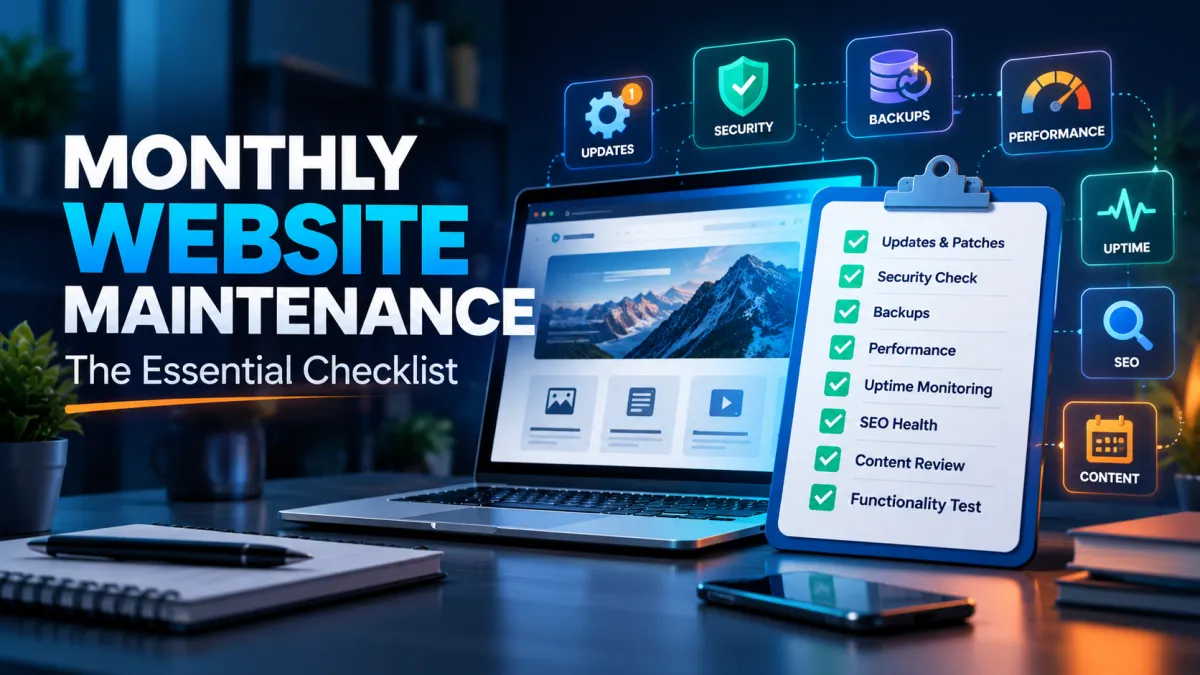
Keep your business website secure, fast, and reliable with this practical monthly maintena...